Unlike the first Magic Leap headset, which launched back in 2018 and aspired to be for creative consumers, the Magic Leap 2 is entirely business-focused. The smaller glasses have their own dedicated AMD hip-worn processor puck. They offer a wider field of view than any other AR headset we’ve tried recently, and a unique feature that dims parts of the real world to make virtual objects seem less ghostly. The headset will come in three variations: the $3,299 Magic Leap 2 Base is the hardware plus a one-year warranty; while the Magic Leap 2 Developer Pro comes with extra developer-focused software and sample projects for $4,099. A Magic Leap 2 Enterprise version, with two-year support for enterprise-ready software, costs $4,999. Magic Leap’s website will indicate where headsets will be available to buy: in the US, UK, Germany, France, Spain, Italy and Saudi Arabia on Sept. 30, and Japan and Singapore by the end of the year.
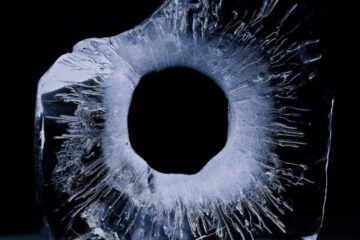
A New ‘Super Ice’ Is 10 Times Stronger, Bringing It Close to The Strength of Concrete
Researchers have created a strengthened “BioPykrete” by combining ice with cellulose nanocrystals and a custom protein that binds the plant-based crystals to the ice structure. In small-scale tests, the material was about 10 times stronger Read more…