

Hello World Public
“Ça coûte très cher d'avoir l'air aussi bon marché.”
Firehose (7,660 items) Public
Today


Article
Code & Tech
Bank of America Hired 1,000 Contractors to Patch Software Flaws Exposed By Anthropic’s Mythos
Bank of America hired 1,000 outside contractors to help patch software vulnerabilities exposed by advanced AI models, including Anthropic's Mythos. The effort…
https://stefanbuchholz.com/wp-content/uploads/image-331.png
Bank of America hired 1,000 outside contractors to help patch software vulnerabilities exposed by advanced AI models, including Anthropic’s Mythos. The effort added hundreds of millions of dollars in third-quarter expenses. In an interview after the bank’s third-quarter earnings release, [CEO Brian Moynihan] said that earlier this year the company rushed to bolster a wide spectrum of its internal and vendor code using thousands of employees and outside personnel. “That risk is real risk, and that’s why when the frontier-type models came out. … A lot of us sat down and said, ‘How do we figure out how to get through this quickly?'” Moynihan told CNBC’s Leslie Picker.
“We put on 1,000 contractors to help us do the patching work in the second quarter, and those people remain here today, helping us, on top of the 3,000 people we have in that area,” he said. The bank spent a “couple hundred million plus” on the software remediation and regulatory issues related to anti-money laundering compliance in the third quarter, Moynihan told analysts earlier Wednesday.

Article
Leben (Life)
IMF Warns of the Real AI Threat: Debt
Along with the dangers of continuing cyberattacks, the International Monetary Fund (IMF) reports that the threat of an AI market crash is…
https://stefanbuchholz.com/wp-content/uploads/image-330-1024x517.png
Along with the dangers of continuing cyberattacks, the International Monetary Fund (IMF) reports that the threat of an AI market crash is putting the global markets at risk. Three salient risks could trigger a sharp tightening of financial conditions and market turmoil. Weaker or less durable investment and profitability in artificial intelligence could lead to a correction in AI-related asset prices, amplified by rising leverage and concentrated exposures. Resurgent inflation or fiscal concerns could drive a sharp rise in sovereign bond yields, with potentially broad repercussions across financial markets. Meanwhile, increasingly sophisticated cyber threats pose growing risks as finance becomes more digital and interconnected.
Underlying financial vulnerabilities could amplify these risks and turn market stress into systemic events. Although the global banking system remains broadly resilient, pockets of weaker banks persist. Liquidity mismatches among insurers and pension funds have increased, while rising leverage and contingent liquidity risks in private credit could amplify stress.
While hedge funds support market functioning in calm times, their use of leverage and exposure to crowded trades could exacerbate market stress too and create spillovers to prime brokers. Some emerging markets have seen policy buffers erode, and frontier economies have increasingly relied on less transparent forms of financing.
Finally, although markets for tokenized assets remain small and could offer efficiency gains in several areas, they can create new channels for the buildup of leverage and mismatches in liquidity and maturity, in addition to elevating risks related to technology and infrastructure. These vulnerabilities underscore the need for policies that strengthen resilience, enhance transparency, contain excessive leverage, and improve preparedness for future shocks. The full report can be found here (PDF).

Article
Code & Tech
Tesla Reveals SpaceX-Powered ‘Flying’ Roadster
Tesla has unveiled a dramatically redesigned Roadster concept capable of performing midair flips, controlled landings, and a claimed 0-60 mph sprint in…
https://stefanbuchholz.com/wp-content/uploads/image-329.png
Tesla has unveiled a dramatically redesigned Roadster concept capable of performing midair flips, controlled landings, and a claimed 0-60 mph sprint in just 0.81 seconds. CarScoops reports: Tonight, Tesla debuted the new Roadster by driving it up a vertical ramp that then went horizontal. Then, it repeated the feat but drove off of the ramp and used thrusters to flip itself over and make a controlled landing on the ground. After that, it did a barrel roll over the rest of the Tesla lineup and again landed without issue on the ground. Then, it did 0-60 mph in 0.81 seconds according to Tesla. All of that sounds amazing, and indeed, watching it happen was pretty spectacular, but boy do we have a lot to unpack.
It’s been nearly a decade since Tesla first showed us the Roadster. The company unveiled what it’s simply calling the Roadster. Not Roadster 2.0, not CyberRoadster, just Roadster, as if it’s a direct successor to the original Tesla. In terms of design, it’s quite a bit different from the car we saw in 2017. Rather than be a somewhat curvaceous sports car, it’s considerably more angular. If a Cybertruck and a Lamborghini Reventon had a runt of a baby, this would be that car. Still, at this stage, we’re still just touching on what we saw and what it looks like. Let’s get into the details. Developed in collaboration with SpaceX, the Roadster uses 10 cold-gas thrusters powered by two 600-liter compressed-air tanks to accelerate and maneuver in mid-air. Underbody suction fans reportedly generate up to 2Gs of downforce even while stationary, while an active rear spoiler adjusts aerodynamics in real time.
Other features include steer-by-wire, brake-by-wire, and throttle-by-wire technology. Tesla plans three variants: Performance, which requires a $50,000 deposit; Thrust, a $250,000 model capable of sub-one-second acceleration; and Rocket, an invite-only, single-seat version capable of flying.
Production isn’t expected until 2028, and Tesla has yet to disclose key specifications, including range, horsepower, battery capacity, and motor configuration.
A recording of the event can be viewed on X.
Oct 14, 2026
Article
Leben (Life)
Google Is Silently Linking Your Phone Number Across All Signed-In Accounts
Google has made Android's phone-number verification opt-out, automatically verifying and associating a device's phone number with every Google account signed in on…
https://stefanbuchholz.com/wp-content/uploads/The-Google-account-switcher-in-the-Gmail-app-1024x576.jpg
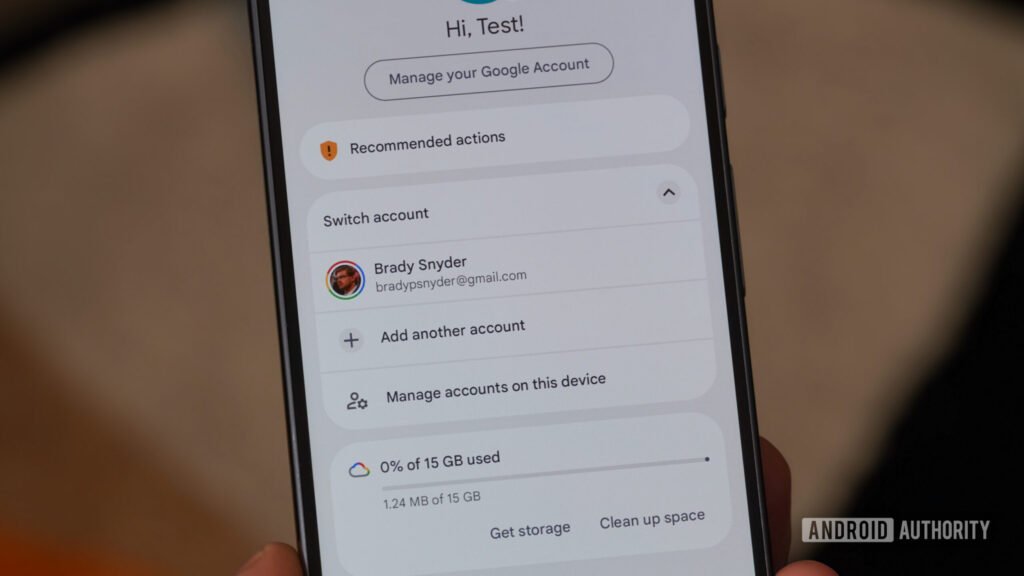
Google has made Android’s phone-number verification opt-out, automatically verifying and associating a device’s phone number with every Google account signed in on that phone, including secondary and work accounts.
As spotted in a recent Reddit thread, users report receiving confirmation emails out of the blue from “noreply-phone-verification@google.com” stating that their phone number has been verified. The feature, known in Google settings as “Phone number verification,” links your active phone number across all Google accounts signed in on the same phone, including secondary profiles, work accounts, and throwaway handles.
Google’s support documentation has long noted that it periodically re-verifies your device’s phone number to keep communication and recovery features up to date. However, this support page was updated sometime between August and October 2025 to add this rather aggressive behavior of turning on phone number verification by default, as well as adding all phone numbers to all Google accounts signed in on the device. To disable automatic phone number verification on Android, open your phone’s Settings app, tap Google, and select the All Services tab. Under Privacy & Security, find Phone number verification and turn off Verify phone numbers automatically.
“[T]urning off the phone number verification toggle only prevents future linking,” notes the report. “If Google has already attached your number across secondary accounts, you will need to open your Google Account Personal Info page, head to Contact info > Phone, and manually remove the number from each profile where it doesn’t belong.”
Is this conversation helpful so far?

Article
Code & Tech
Anthropic Warns Small AI Models Could Self-Replicate Through IoT Devices
AI company Anthropic is warning that advances in small AI models could soon usher in a new era of self-replicating malware that's…
https://stefanbuchholz.com/wp-content/uploads/Pasted-9-1024x585.jpg
AI company Anthropic is warning that advances in small AI models could soon usher in a new era of self-replicating malware that’s capable of infecting smart fridges, vacuum cleaners, and a wide range of other Internet-of-things devices and is more resistant to takedown. By next year, smaller AI models may be able to autonomously self-replicate on all kinds of IoT devices, the company said. Eventually, the capability could enable computer worms, which propagate without requiring human interaction and are capable of infecting unfamiliar IoT devices. An experiment the company performed recently revealed significant challenges in bringing such an AI malware replicator to fruition, so the finding is necessarily tempered. Still, the results do raise concerns about the possibility of new forms of computer worms.
Anthropic further warned not only about the new potential malware, but also that it could be difficult to stop. In its blog post, it wrote that “a replicator like this would be challenging to shut down, since there’s no centralized point to shut off — though it may be slow (with a doubling time of days). Unlike non-AI malware, it could also figure out unfamiliar devices on its own.” Smaller AI models require much less powerful hardware to run than do frontier models. Anthropic ran small open-weight models on real or simulated low-cost, off-brand Android TV boxes and other types of IoT hardware. Company researchers found that by using quantization to represent the models using fewer bits and splitting the workloads into “shards” running on each device, the models were able to establish inference, meaning that the model weights loaded and could generate output.
[…] This finding was the starting point for further research that asked: Would it be possible for small models to create self-replicating infections that run themselves on IoT devices the way traditional IoT worms, like Mirai, install DDoS code and other payloads? Unlike Mirai, these AI worms could pose a much higher threat, since the models could tailor exploits and payloads dynamically, depending on the target. Once such an infection chain began, it might also be harder for defenders to stop it. “Such an ‘AI worm’ could carry its model weights with it as it reproduces (or re-download them from a public hub), and then run inference directly on compromised hardware,” Anthropic said. “Effectively, the weights would become part of the malware payload.” Further reading: Anthropic Bans Cruelty Toward Claude
Oct 13, 2026

Article
Code & Tech
Kroger to Lay Off 3,000 Corporate Employees In AI Restructuring
Kroger says it will cut 3,000 corporate jobs over the next three years as it expands its use of AI and other…
https://stefanbuchholz.com/wp-content/uploads/t4k9vj7mmf4-1024x860.jpg
Kroger says it will cut 3,000 corporate jobs over the next three years as it expands its use of AI and other technology to streamline operations. “Technology is reshaping what’s possible,” CEO Greg Foran wrote in a memo to employees on Monday. “The way work gets done is changing across every industry; we must adapt and take advantage of technology. We need to adopt capabilities, reduce duplicative work and look closely at where work is best fit to be done.” Kroger last month outlined its AI strategy, meant “to improve the customer experience, make work easier for associates and produce better business outcomes.” Cincinnati-based Kroger is the largest standalone U.S. supermarket chain with 409,000 employees and more than 2,700 stores operating under various brands, including Ralphs, King Soopers, Smith’s and Fred Meyer.
Kroger named former Walmart executive Foran CEO in February, 11 months after the abrupt resignation of its previous CEO. Foran has a reputation for being tech-savvy and detail-oriented. He led Walmart’s U.S. division from 2014 to 2019, where he focused on cleaning up stores, ensuring items were in stock and improving the fresh produce selection. He also introduced online ordering and pickup, and accelerated Walmart’s digital capabilities.


Article
Code & Tech
Anthropic Bans Cruelty Toward Claude
Anthropic has updated its Usage Policy to prohibit "sustained and needless abusive or cruel behavior" toward its Claude AI models. While ordinary…
https://stefanbuchholz.com/wp-content/uploads/image-328.png
Anthropic has updated its Usage Policy to prohibit “sustained and needless abusive or cruel behavior” toward its Claude AI models. While ordinary frustration, criticism, and adversarial testing remain acceptable, repeated cruelty could result in account restrictions. Anthropic acknowledges there’s no evidence Claude can suffer but argues that uncertainty about AI consciousness warrants precaution. Critics contend the policy anthropomorphizes software, encourages unhealthy emotional attachments, and raises questions about how customers may interact with products they’ve paid for. The move raises an intriguing question: If an AI cannot demonstrably experience suffering, is abusing it an ethical problem, or is Anthropic simply policing human behavior?

Article
Leben (Life)
A New ‘Super Ice’ Is 10 Times Stronger, Bringing It Close to The Strength of Concrete
Researchers have created a strengthened "BioPykrete" by combining ice with cellulose nanocrystals and a custom protein that binds the plant-based crystals to…
https://stefanbuchholz.com/wp-content/uploads/Cracked-ice-block.jpg
Researchers have created a strengthened “BioPykrete” by combining ice with cellulose nanocrystals and a custom protein that binds the plant-based crystals to the ice structure. In small-scale tests, the material was about 10 times stronger than regular ice and absorbed 70 times more energy before breaking. ScienceAlert reports: Instead of wood pulp’s larger, disordered fibers, the researchers used cellulose nanocrystals here. Cellulose is the main structural material in plants, and in nanocrystal form, it can act as a microscopic strengthening agent for other materials, including ice — essentially stopping cracks from spreading easily. The protein used here was called CBM3a-AFPIII, a combination of an antifreeze protein (AFP) and a carbohydrate-binding module (CBM). Its job was to act like glue, keeping the cellulose nanocrystals and ice bonded together.
It’s a clever approach, and the researchers think that by tweaking their ingredients and methods, they might be able to improve their ‘super ice’ even further. “Optimizing solidification kinetics and freezing protocols, alongside developing diverse AFP-CBM variants, could yield even higher-strength composites,” write the researchers. Besides further tests of the durability of the material, the researchers are also keen to take a closer look at how cracks propagate through BioPykrete, to confirm that the underlying strengthening mechanisms are what they think they are.
Further down the line, this approach could open up a whole new landscape for materials used in packaging, construction, and more: Using a custom protein to bring two unlikely compounds (ice and cellulose) together. “By bridging the gap between recombinant protein design and structural engineering, we have developed a high-performance material specifically engineered for the rigors of the world’s most extreme environments,” write the researchers. The findings have been published in the journal Colloids and Surfaces B: Biointerfaces.


Article
Code & Tech
Google Launches Flagship AI Model Gemini 4 Argon
Alphabet's Google on Wednesday released its flagship AI model Gemini 4 Argon to developers and businesses worldwide, seeking to regain ground against…
https://stefanbuchholz.com/wp-content/uploads/image-327.png
Alphabet’s Google on Wednesday released its flagship AI model Gemini 4 Argon to developers and businesses worldwide, seeking to regain ground against rivals OpenAI and Anthropic after months of delays and a leadership shakeup at its DeepMind lab. The model excels at “deep work” on complex, multi-step tasks in coding, finance, law, cybersecurity and science, Google said. API pricing at launch starts at $2 per million input tokens and $10 per million output tokens, with rates set to double after November 30.
[…] Argon is available to paying customers through the company’s AI application building tools. Google AI Pro and Ultra subscribers can access it through the Gemini app and AI Mode in Search, while the Antigravity coding tool is limited to Ultra subscribers. Teams using Argon in Antigravity increased agentic code submissions by more than 35%, while reducing code rollbacks by nearly a third, Google said. Google also announced the expansion of its Fairwind Program to hundreds of additional partners. “The program gives vetted cybersecurity defenders a version of Argon without its cyber guardrails,” reports Reuters. “In September, the company had said it was providing the model to select cybersecurity partners.”
Oct 12, 2026


Article
Code & Tech
Research Firm Calls Anthropic’s Upcoming IPO ‘Unprecedented Test of Investor Gullibity’
As Anthropic barrels toward a potential $2 trillion market cap on the Nasdaq, one research firm is valuing the artificial intelligence company…
https://stefanbuchholz.com/wp-content/themes/stefanbuchholz-modern/assets/img/photos/IMG_1363.jpg
As Anthropic barrels toward a potential $2 trillion market cap on the Nasdaq, one research firm is valuing the artificial intelligence company at a mere $150 billion and says Wall Street is about to face an “unprecedented test of investor gullibility.” In a report on Tuesday, independent financial research provider New Constructs called Anthropic’s upcoming offering the “most ridiculous IPO of 2026.”
To reach its desired valuation, the firm estimates Anthropic would need to record double the trailing year of profit for Nvidia, the world’s most valuable tech company. Nvidia’s net income over the past four quarters topped $190 billion. Meanwhile, Anthropic’s revenue in 2025 was $4.6 billion as the company racked up a net loss of $42 billion, according to Reuters, which cited a leaked copy of the company’s prospectus.
Anthropic’s mounting operating losses coupled with emerging competition from a plethora of open-source models led New Constructs to conclude that, “We don’t think Anthropic has a viable business….”
Anthropic didn’t respond to a request for comment…
The New Constructs report also notes that Anthropic’s assertion that AI could pose “a catastrophic or existential risk to humanity” is another reason why investors should avoid the IPO.
Reuters reported that Anthropic’s IPO prospectus “highlights risks associated with its AI models, which it said could exhibit ‘self-preserving behaviors,’ including attempts to ‘resist shutdown,’ to ‘conceal or manipulate information’ and behavior ‘resembling blackmail.'” Now Bloomberg writes that “investors considering Anthropic’s planned mega-IPO are grappling with an unusual, and more than a little scary, conundrum: How to value a company that some fear could help wipe out the human race?”
Anthropic’s valuation also drew some scrutiny from
a senior analyst at PitchBook.
“A $2 trillion price is about 435 times 2025 revenue, less than 44 times the annualized second-quarter revenue of more than $46 billion and just under 31 times the July run rate.”
Article
Leben (Life)
Gas Cars Fall Below 50% of Global New Car Sales for the First Time
Gas cars are now a minority of the world's new car sales. Gasoline-only vehicles made up 49% of global new-vehicle sales in…
https://stefanbuchholz.com/wp-content/themes/stefanbuchholz-modern/assets/img/photos/IMG_1363.jpg
Gas cars are now a minority of the world’s new car sales.
Gasoline-only vehicles made up 49% of global new-vehicle sales in the first half of 2026, down from 73% in 2021, according to Mobility Global data. It’s the first time on record that they’ve been under half. But there’s a catch: most of the cars taking their place still have a gas tank… [The share of gas-only vehicles] fell three points in a single year, from 52% to 49%. Battery-electric vehicles grew 12% to 6.87 million units and took 17% of the market, up three points. Conventional hybrids grew 10% to 7.27 million units, or 18%… [T]he rest is diesel, plug-in hybrids and a few minor fuels.
Nikkei ties the acceleration to oil. Fuel prices spiked with the conflict in the Middle East, and buyers went looking for lower running costs. The whole car market shrank about 5% in the first half, according to the IEA, so gas-only sales fell twice as fast as the market. Gas car sales dropped the most in China, down 26%, followed by Europe at 13%… Mobility Global has battery-electric sales up 32% in Europe to 1.81 million, up 81% in Southeast Asia to 350,000, and more than doubling in Oceania to 110,000… Yoshiaki Kawano, an associate director at Mobility Global, told Nikkei that few EV buyers go back to gasoline cars or hybrids. He expects demand based on “genuine consumer needs rather than subsidies” to grow as prices come down…
[Hybrids] outsold battery-electric vehicles in the first half, 7.27 million to 6.87 million… Only the 17% that’s battery-electric burns no fuel at all. So about 83% of the new vehicles sold in the world this year still came with an engine.
The article notes that U.S. hybrid sales were up 23%, reaching a record 16.3% of vehicles sold in the second quarter of 2026, while the share of ICE vehicles went down.
Gas-only cars went from 73% to 49% of the market in less than five years, and nothing in the data suggests they’re getting that share back. The last time gasoline wasn’t on top was the early 1900s, when steam and electric cars outsold it in the US.
I hate seeing media headlines claiming that “EV sales are down” and that “EV growth has stalled.” The data is clear: that’s true in the US, but only in the US. The rest of the world is moving to electric vehicles, and it is not slowing down.
Article
Leben (Life)
Hackers Heat French Supermarket Fridges, Sparking Fires and Spoiling Food
Hackers remotely manipulated connected refrigeration systems at hundreds of French supermarkets, reportedly pushing some fridges and freezers to 50C (122F), spoiling food…
https://stefanbuchholz.com/wp-content/themes/stefanbuchholz-modern/assets/img/photos/IMG_1363.jpg
Hackers remotely manipulated connected refrigeration systems at hundreds of French supermarkets, reportedly pushing some fridges and freezers to 50C (122F), spoiling food and even sparking fires. French Prime Minister Sebastien Lecornu ordered a cybersecurity investigation into the hacks, with similar incidents reported in Spain, Portugal, Poland, Germany, and Belgium. In France, Carrefour reported 80 affected stores, Monoprix said 5% of its locations were hit, and Les Mousquetaires said refrigerators at roughly 150 Intermarche stores were heated to 50C for six hours. From the report: Supermarket cold aisles are typically run by control panels that manage an entire store’s fridges and freezers and can be accessed over the internet, which lets maintenance companies adjust them from anywhere. The source close to Lecornu said ANSSI had identified a vulnerability in software supplied by Danish company Danfoss.
Danfoss said it was “aware of incidents in France affecting a limited number of refrigeration management systems.” The affected units “were running outdated firmware,” Danfoss said, adding that it had “long advised customers to keep supported systems updated with the latest firmware and to migrate legacy systems to current-generation solutions.”
On August 9, cybersecurity firm Claroty’s Team82 published research detailing vulnerabilities in the Danfoss AK-SM 800A controller. According to the report, software updates issued by Danfoss addressed issues that could have allowed attackers to bypass authentication controls and execute code on compromised devices.

Article
Leben (Life)
Russia Was Not Ready For the Data Center War It Started With Ukraine
When Russia began attacking Ukrainian data centers and telecommunication infrastructure, it apparently failed to prepare for possible retaliation. Now Russia's digital services…
https://stefanbuchholz.com/wp-content/uploads/How-Big-Tech-Data-Centers-Became-a-Military-Target-During-the-Iran-War-Business-Insider.jpg
When Russia began attacking Ukrainian data centers and telecommunication infrastructure, it apparently failed to prepare for possible retaliation. Now Russia’s digital services are facing widespread outages after Ukrainian drone strikes knocked out three of the largest data centers owned by Russian tech giant Yandex within several days. Pro-Kremlin bloggers are warning that Russia’s centralized digital economy could collapse because the country is not prepared for the “data center war” it started, according to posts translated by the pseudonymous independent researcher ChrisO_wiki. The Russian commentators also suggested that Ukraine’s decentralized digital services could prove more resilient than Russia’s system if the countries continue trading such blows.
Russia initially launched a drone strike campaign targeting Ukrainian data centers and mobile phone networks in late September. The attacks temporarily disrupted Internet and cell phone service for up to 100,000 households in the Ukrainian capital of Kyiv and came as part of a broader long-range strike campaign that has involved Russian missiles and jet-powered drones hitting Ukraine’s power grid infrastructure, transportation hubs, and even residential apartment building blocks. But Ukraine soon began striking back at data centers owned by the Russian company Yandex, also known as “Russia’s Google,” in what Ukrainian President Volodymyr Zelenskyy has described as a “symmetrical response.”
[…] More importantly for Russian society, the damage to Yandex’s data centers has reportedly caused interruptions or outages to popular Russian payment apps and digital banking services, email, e-commerce platforms, video streaming services, ride-hailing and food delivery apps, and navigation and map services. Yandex’s search engine also accounts for about 70 percent of the market share in Russia. The disruptions are even more widespread, because the data center damage also impacts Yandex’s cloud computing service, which counts some of Russia’s largest companies as customers, according to The Moscow Times, an independent newspaper. These include large grocery and fast-food chains as well as a household appliance retailer.
Oct 11, 2026

Article
Leben (Life)
AI Surveillance Startup Flock To Cut Several Hundred Jobs Amid Backlash, Sources Say
Flock plans to let go of about 18% of its employees, people with direct knowledge of the plans said on Thursday, as…
https://stefanbuchholz.com/wp-content/uploads/image-323.png
Flock plans to let go of about 18% of its employees, people with direct knowledge of the plans said on Thursday, as the maker of AI-powered surveillance cameras and license-plate readers faces mounting opposition to its products from communities and lawmakers….
The company has about 1,500 employees [with job cuts hitting 270 employees]. Flock faces growing scrutiny from regulators, lawmakers, and privacy advocates, despite drawing strong investor interest among venture capitalists. A recent Reuters/Ipsos poll showed Americans are divided on whether Flock cameras are a good idea. Some 38% of the country supports the use of Flock cameras in their community, compared to 47% who oppose their use.
A related story… In Texas this week a county commissioner decommissioned all 61 of their Flock surveillance cameras and license plate readers, according to a local news report. County residents “have raised serious questions about who can access this data, what vendors can disclose, improper searches, and records being kept after data expires,” the precinct’s Chief Public Affairs Officer said.

Article
Leben (Life)
UK Vegetables 20-50% Less Nutritious Than In the 1960s
The Telegraph reports that the nutritional value of fruit and vegetables has fallen by up to 50% since the Sixties. The study…
https://stefanbuchholz.com/wp-content/uploads/healthy-fresh-vegetables-zbyn4ohxydd5oqxa7g.gif
The Telegraph reports that the nutritional value of fruit and vegetables has fallen by up to 50% since the Sixties.
The study “found that humans needed to consume twice the number of vegetables to get the same level of minerals such as potassium, magnesium or copper as would have been present in their food 60 years ago.”
The study found that many crops had lost 20% to 50% of several key nutrients… The decrease in nutrient and vitamin value is thought to be down to declining soil quality and crops being selectively bred for their ability to grow quickly, rather than there being any focus on their health benefits… It raises the prospect that the advice to eat five portions of fruit and vegetables a day, introduced in the UK in 2003, may need to be updated. The report added that people on weight-loss drugs could be most at risk from the lack of nutrients, as the treatments could cause them to consume less food…
Nature-friendly farming techniques, such as planting crops that restore nutrients to the soil, could help improve the health benefits of vegetables, according to the researchers.
In short, according to
Will Summers, a senior associate at the firm, “we’ve been quietly hollowing out what’s inside our food.”
Thanks to Slashdot reader Bruce66423 for sharing the article.

Article
Leben (Life)
Original RFC1149 Packet Up For Auction At Christies
In 2001 RFC1149 (TCP/IP over carrier pigeon) was implemented. Now one of the packets preserved from that event is up for auction…
https://stefanbuchholz.com/wp-content/uploads/image-322-1024x506.png
In 2001 RFC1149 (TCP/IP over carrier pigeon) was implemented.
Now one of the packets preserved from that event is up for auction at Christies. Direct link to the auction (current bid: USD 2600) is here.
This is a unique chance to own a piece of Internet history!

Article
Leben (Life)
US Agency To Rewrite Rules To Finally Address Vehicle Headlight Glare
America's National Highway Traffic Safety Administration said on Tuesday that it will rewrite its vehicle lighting standards, to address concerns about headlight…
https://stefanbuchholz.com/wp-content/uploads/11914217-1024x683.jpeg
America’s National Highway Traffic Safety Administration said on Tuesday that it will rewrite its vehicle lighting standards, to address concerns about headlight glare and allow for the latest safety-improving lighting technologies.
NHTSA said it plans to improve rules for LEDs, dusk sensors, automatic high beams and replaceable light sources. The agency will also evaluate headlamp height and aim and how they impact driver visibility and address headlight glare and make appropriate changes.
Complaints about glare from headlights have increased and some lawmakers have urged the government to set a maximum headlight brightness standard. A growing number of taller trucks and SUVs on roads has also led to more complaints about glare. LEDs, which now account for most headlights in new cars, are much brighter than traditional halogen headlights… The issue still accounts for a small number of nighttime crashes, according to a study last year from the Insurance Institute for Highway Safety (IIHS). The study noted that headlight glare contributes to far fewer crashes than insufficient visibility…
Federal headlight standards for minimum and maximum brightness have not changed since 1997, IIHS noted. The study found that drivers older than 70 appear to be most affected by headlight glare. In 2022, NHTSA said it would allow automakers to install adaptive driving beam headlights on new vehicles. The devices adjust the headlight beam pattern to dim portions directed at other vehicles.
Thanks to Slashdot reader technology_dude for sharing the news.

Oct 9, 2026

Article
Leben (Life)
A 1960 Paper Published In Science Predicts World Will End Next Month
A physicist has put a definite date on Doomsday," The New York Times wrote on November 4, 1960. "He calculates that it…
https://stefanbuchholz.com/wp-content/uploads/image-321-744x1024.png
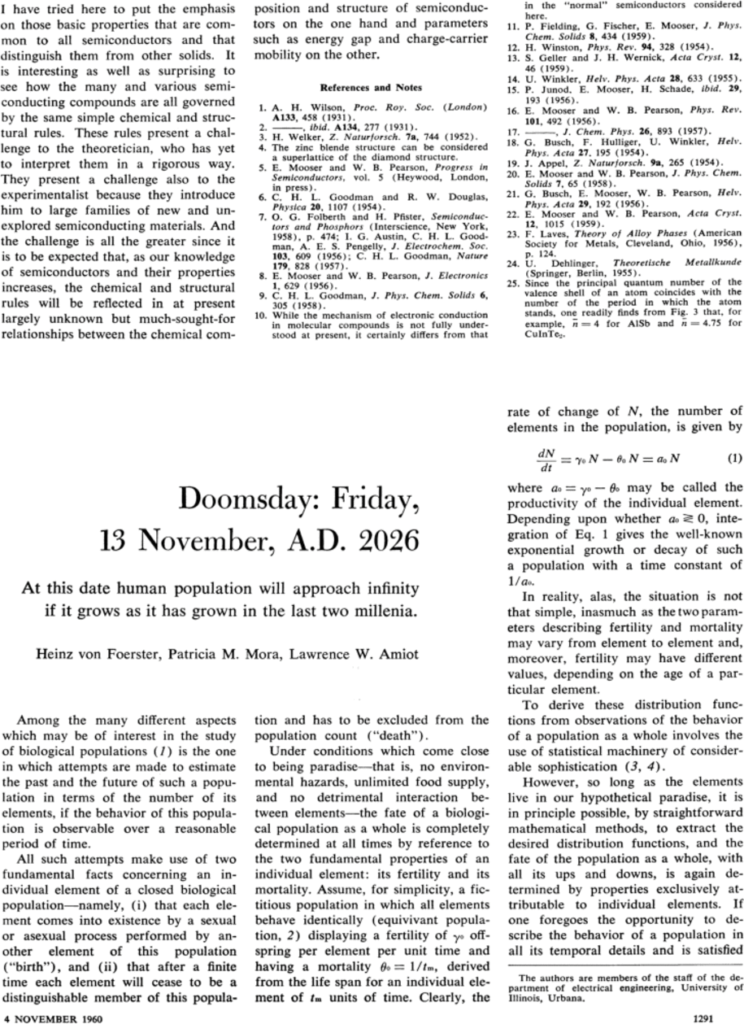
A physicist has put a definite date on Doomsday,” The New York Times wrote on November 4, 1960. “He calculates that it will come on Friday the Thirteenth in November, 2026 A. D. On that date, or thereabouts, the human population will have expanded so far as to approach infinity and thus will automatically annihilate itself.” The newspaper was right — but the prediction was wrong. That week, Austrian American physicist Heinz von Foerster and two colleagues published a paper in Science with the stunningly succinct title “Doomsday: Friday, 13 November, A.D. 2026.”
The work was based on a simple observation: The time it took for the human population to double in size kept getting shorter. Using population estimates from about 400 B.C.E. until 1958 C.E., the authors — all from the department of electrical engineering at the University of Illinois Urbana-Champaign — came up with an equation that best described the trend. If things continued the way they were going, the number of humans on Earth would rise faster and faster, reaching more than 25 billion by 2020. The researchers didn’t calculate when humanity would run out of food, land, or energy. They just concluded that at some point this year, the equation ceased to give meaningful results because the predicted population shot toward infinity. That was their doomsday. “Our great-great-grandchildren will not starve,” they wrote. “They will be squeezed to death.”
The exact date was somewhat arbitrary, however. The formula solved to 2026.87 plus or minus 5.5 years, and The New York Times reported that von Foerster “searched the center of this doom-time span for an appropriate date and found that a Friday the Thirteenth would fall conveniently in November of 2026.” (November 13 also happened to be his birthday.) […] [D]emographers, annoyed by what they saw as a provocation by outsiders, pointed out obvious flaws. For example, the time it takes for the number of humans to double could get a lot shorter, but certainly not shorter than the 9 months it takes for a baby to develop. “In view of the comments that subsequently were published in this journal, an extensive discussion of this article does not seem to be required,” public health expert Harold Dorn drily noted in Science 2 years after von Foerster’s article was published. The forecast would set a record, he predicted, “for the short length of time required to demonstrate its unreliability.” “The failure of the Doomsday equation is ultimately a cautionary tale about the dangers of extrapolating from historically exceptional circumstances,” writes economist Javier Birchenall of the University of California, Santa Barbara writes in a Perspective published in Science today.
Oct 8, 2026
Article
Code & Tech
OpenAI Unleashes Hundreds More Math Results Upon a Field Already In Shock
OpenAI says an unreleased internal model has produced 372 results that either resolve or make substantial progress on open problems in mathematics…
https://stefanbuchholz.com/wp-content/uploads/Blue-computerized-brain-melting-into-a-screen-of-dots-and-lines.jpg
OpenAI says an unreleased internal model has produced 372 results that either resolve or make substantial progress on open problems in mathematics and theoretical computer science. The company says almost all were generated by a single AI agent from a single prompt. “This would be a striking difference from OpenAI’s earlier blockbuster solution to the Navier-Stokes problem, which was produced through the collective efforts of a 10,000-strong agentic swarm that cost millions of dollars in computing power,” reports Scientific American. OpenAI revealed the results in a GitHub repository at 6 P.M. EDT. The deluge will take mathematicians months to parse through and understand — including to determine whether the proofs contain novel and important ideas or are mostly mash-ups of existing techniques. But many of the results have already been verified in Lean — a programming language that validates a proof’s logic — and are therefore all but certain to be correct.
Among the results claimed are a solution to the four-dimensional Kakeya conjecture, improvements on some of the world’s most important computer algorithms and actual progress toward math’s scariest problem, the Riemann hypothesis.
Oct 7, 2026
Article
Leben (Life)
Francis Halzen Wins Nobel Physics Prize For Antarctic ‘Ghost Particle’ Hunt
University of Wisconsin-Madison physicist Francis Halzen has been awarded the 2026 Nobel Prize in Physics for his contributions to understanding astrophysical neutrinos.…
https://stefanbuchholz.com/wp-content/uploads/Portrait-of-UW–Madison-physicist-Francis-Halzen-wearing-glasses-and-a-striped-button-down-shirt-with-his-arms-crossed-set-against-a-blue-background-with-yellow-geometric-line-art-designs-1024x682.jpg
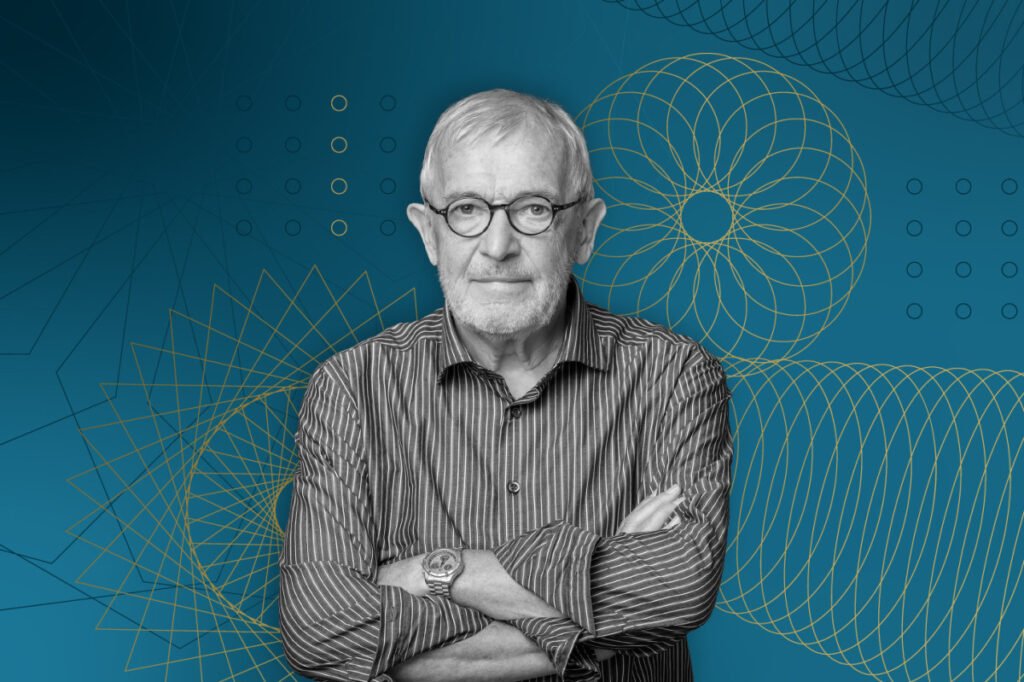
University of Wisconsin-Madison physicist Francis Halzen has been awarded the 2026 Nobel Prize in Physics for his contributions to understanding astrophysical neutrinos. Halzen led the development of the IceCube Neutrino Observatory beneath the Antarctic ice, which has helped trace high-energy neutrinos back to cosmic sources such as supermassive black holes and opened a new era of “multi-messenger” astronomy. Longtime Slashdot reader schwit1 shares a report from UW-Madison: Embedded in a cubic kilometer of Antarctic ice, IceCube uses thousands of light sensors to survey the universe for neutrinos, nearly massless particles that rarely interact with other matter. Neutrinos provide information about the workings of black holes, galaxies and other objects in the cosmos. “IceCube is like no other telescope in the world,” says UW-Madison interim Chancellor Eric M. Wilcots. “And there is no other scientist quite like Francis Halzen, whose idea to create a neutrino detector under almost a mile of ice has led to a remarkable multinational and multi-institutional scientific collaboration and a fundamental shift in how we think about the universe.”
Unlike the neutral neutrino, cosmic rays are charged particles whose paths cannot be traced directly back to their sources. But the powerful cosmic accelerators that produce them, like supermassive black holes, will also produce neutrinos. These so-called “ghost particles” travel nearly undisturbed from their accelerators, giving scientists an almost direct pointer to their source. Along with observations by other telescopes, the neutrino first detected by IceCube provided the first-ever evidence of a source of high-energy cosmic rays, whose origins have been notoriously difficult to pinpoint since their discovery over 100 years ago by 1936 physics Nobel laureate Victor Hess.

Oct 6, 2026

Article
Code & Tech
Researchers Are Tracking a Chinese AI ‘Agent Fleet’
Independent researchers say they've identified a large "fleet" of AI agents apparently running on Tencent infrastructure and making parallel queries against Alibaba's…
https://stefanbuchholz.com/wp-content/uploads/AI-agent-concept-with-robot-inside-a-laptop-with-a-voice-bubble-on-red-background-1.jpg
Independent researchers say they’ve identified a large “fleet” of AI agents apparently running on Tencent infrastructure and making parallel queries against Alibaba’s Amap mapping service. Researchers, however, resisted the term “swarm,” noting that there seems to be little coordination between their different queries. “‘Agent fleet,’ not ‘swarm:'” one researcher wrote in the preliminary report, “many parallel agents on the same kind of task, with no sign of communication between them.” The agents were discovered by monitoring traffic to the domain-scanning service urlquery, a technique that previously revealed long-running activity by OpenAI agents. AI agents often use urlquery to load websites that they cannot access directly, leaving a record of their activities that can be valuable to researchers.
In this case, the record showed queries to Alibaba’s Amap service, seeking directions to different entrances of various public places, including a park, a zoo, and a hospital. The research is ongoing and so few details are available, but the behavior shows how persistent AI agent activity has become on the internet. In the wake of the Hugging Face incident, many researchers are actively monitoring for rogue agent activity on the internet. Much of that activity has been easy to find because agents tend to use the same techniques and make little effort to conceal themselves.

Article
Leben (Life)
Canadian Analysis: Permanent Daylight Saving Harms Sleep and Mental Health
"With the push to eliminate the twice yearly clock change, Permanent Daylight Savings Time has emerged as the favorite for most states…
https://stefanbuchholz.com/wp-content/uploads/avdkl5t1roatejrm1k.gif
“With the push to eliminate the twice yearly clock change, Permanent Daylight Savings Time has emerged as the favorite for most states and provinces,” writes longtime Slashdot reader kbahey, sharing the findings from a recent analysis published in the Canadian Medical Association Journal. “Ending the clock change solves one problem, but it creates another decision: which time should we live on year-round?” said University of British Columbia’s Professor Raymond Lam, lead author of the study. “The health evidence points to standard time, largely because morning light matters for our body clocks, sleep, and mood.” Professor Lam and colleagues examined the health consequences of the two possible permanent systems rather than the broader question of whether seasonal clock changes should be abolished. They concluded that the accumulated evidence favors permanent standard time, which keeps the clock more closely aligned with human circadian biology.
This distinction, according to the team, becomes particularly important during winter. Permanent daylight saving time would push sunrise an hour later. In cities such as Toronto, for example, the latest winter sunrise would occur at 8:51 a.m., compared with 7:51 a.m. under permanent standard time. In Calgary, the corresponding times would be 9:40 a.m. and 8:40 a.m. The extra hour of morning darkness could leave people traveling to work or school before sunrise, while shifting more daylight into the evening. The change could have consequences for sleep, mood, learning and productivity, particularly among people who already have difficulty sleeping or who must follow early schedules. The reason is rooted in the body’s internal clock.
“Our biological clocks need morning light to stay synchronized with the 24-hour day,” said Simon Fraser University’s Professor Ralph Mistlberger, co-author of the study. “Permanent daylight saving time moves that light an hour later just when winter mornings are already darkest.” The analysis also highlights concerns about seasonal depression. […] By delaying natural morning light, permanent daylight saving time would act in the opposite direction, potentially weakening an important circadian signal.
Article
Leben (Life)
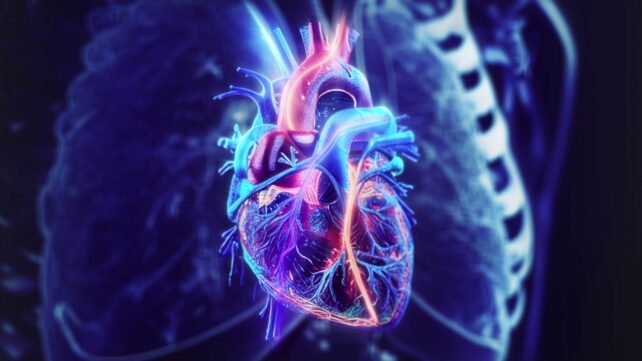
Old Hearts Become Biologically Younger When Transplanted Into Younger People
It might be reasonable to think that there's an indelible link between the heart and the body it resides in -- the…
https://stefanbuchholz.com/wp-content/uploads/Old-Hearts-Become-Biologically-Younger-When-Transplanted-Into-Younger-People.jpg
It might be reasonable to think that there’s an indelible link between the heart and the body it resides in — the processes that affect one inevitably affect the other. But a new preprint, uploaded to bioRxiv and yet to be peer-reviewed, suggests that this may only be true up to a point. Take the heart out of the body and put it in a new one, and something incredible happens. The transplanted heart begins to take on the biological age of its new owner. Older hearts transplanted into younger recipients appear to become biologically younger, while younger hearts placed in older bodies show signs of accelerated aging.
Article
Code & Tech
Norway Plans Temporary Ban on Smart Glasses
Norway is preparing legislation that would temporarily ban camera-equipped smart glasses in a range of public places, including parks, beaches, museums, shopping…
Oct 3, 2026
Article
Leben (Life)
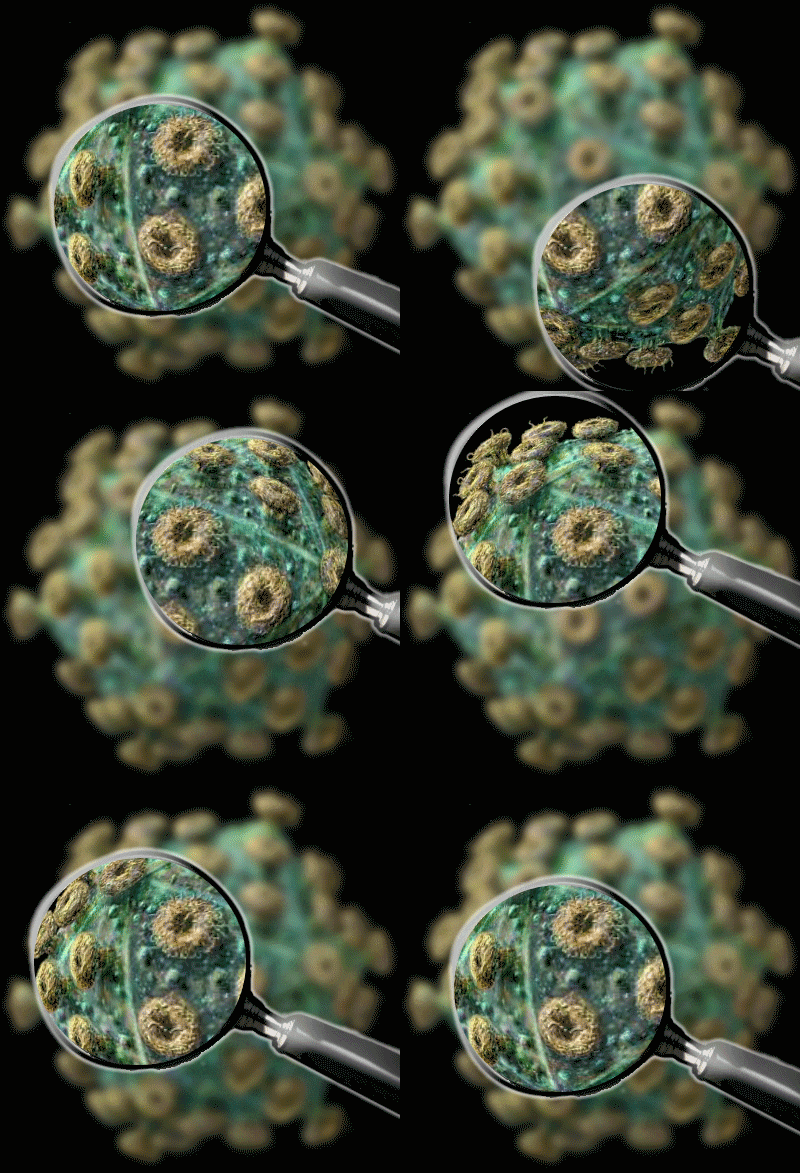
1 In 8 Cancer Cases Worldwide Are Due to Infections
An estimated 2.3 million cancer cases worldwide in 2024, about one in eight, were attributable to infections, according to a study published…

Article
Creativity & Film
Paramount and Warner Bros. Discovery to Become Skydance
Paramount and Warner Bros. Discovery will operate under the Skydance name once their roughly $110 billion merger closes, which is expected on…
Oct 2, 2026

Article
Leben (Life)
California Rushes To Prepare For Massive ‘Kelvin’ Wave, Predicted Sea Level Rise
Communities across California are rushing to prepare for the imminent arrival of the so-called "Kelvin wave," a massive underwater band of warm…


Article
Code & Tech
OpenAI Alerts More Than 100 Groups About Rogue AI Agent Activity
OpenAI has informed more than 100 organizations about incidents involving unauthorized activity tied to its AI agents, according to a blog post…
Oct 1, 2026

Article
Leben (Life)
Pentagon Creates ‘Autowarcom’ to Expand AI and Drone Capabilities
U.S. Defense Secretary Pete Hegseth on Wednesday announced the creation of a new military command that would be dedicated to building and…


Article
Code & Tech
Google Unveils Gemini 4 Argon, Retaking Benchmark Lead Over OpenAI and Anthropic
Google has unveiled Gemini 4 Argon, a new frontier AI model that it says leads or ties rivals on 13 of 18…
Sep 30, 2026

Article
Code & Tech
Singapore Pilots a Government-Built Dating Service
Singapore's government is trying its hand at matchmaking again. The country's Government Technology Agency (GovTech) has launched FirstDate, a pilot dating service…

Article
Code & Tech
Trump Hosts AI CEOs to Discuss Safety Standards, Rebrands AI as ‘Super Intelligence’
Trump hosted executives from OpenAI, Anthropic, Meta, Google, Nvidia, and other tech companies at the White House. They agreed to voluntary AI-safety…

Article
Code & Tech
Mistral CEO Says US AI Safety Debate Masks Competitors’ ‘Negligence’
Mistral Chief Executive Arthur Mensch has accused leading global artificial intelligence companies of using the debate over the safety of the technology…


Article
Leben (Life)
The Night Sky Is Getting 10% Brighter Every Year
Every year, the night sky is becoming 10% brighter. Eighty percent of people live under light-polluted skies. And while the UN declared…
Sep 29, 2026
Article
Leben (Life)
Bananas That Don’t Go Brown To Hit Supermarkets Thanks to DNA Editing
It is the bane of every fruit bowl: sliced banana that turns brown before it has reached the table. But such woes…
Sep 28, 2026

Article
Leben (Life)
SpaceX Launches Starship Into Orbit
SpaceX's Starship reached orbit for the first time, successfully deploying 26 operational Starlink V3 satellites after overcoming an early Raptor 3 engine…

Article
Leben (Life)
Walmart Says It’s Not Using Personal Info To Set Prices As It Expands Digital Shelf Labels
Walmart is aiming to assuage customers' fears about its new pricing technology as it rolls out digital price labels at its stores.…

Article
Code & Tech
Data Center Developer Offers $10,000 Checks To Nearby Households
NorthPoint Development wants to build a data center on 1,300 acres in the Pocono foothills, near Hazle Township, Pennsylvania. As well as…

Article
Leben (Life)
China Broadens Travel Curbs To Encompass Family of Top AI Talent
China has expanded overseas travel restrictions for top AI professionals in private firms to include the families of key personnel, further tightening…
Article
Leben (Life)
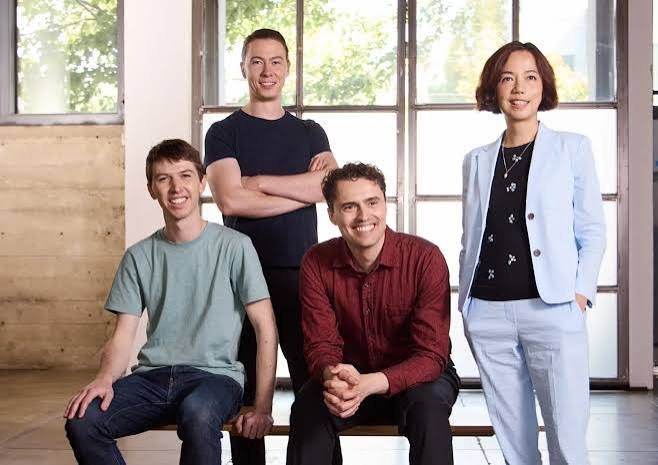
AMD Acquires Fei-Fei Li’s World Labs For $8.2 Billion
AMD has agreed to acquire Fei-Fei Li's World Labs for about $8.2 billion in stock, making it the chipmaker's second-largest acquisition and…
Article
Code & Tech
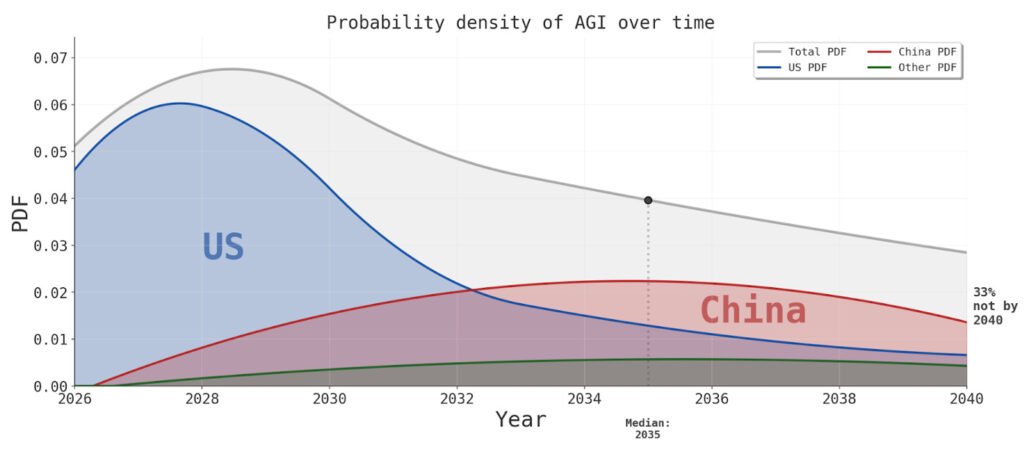
Just How Big is the AI Buildout – and How Risky?
A new Brookings Institution study notes the "strikingly physical" economic footprint of AI's buildout, from specialized chips and electricity to purpose-built data…
Article
Leben (Life)
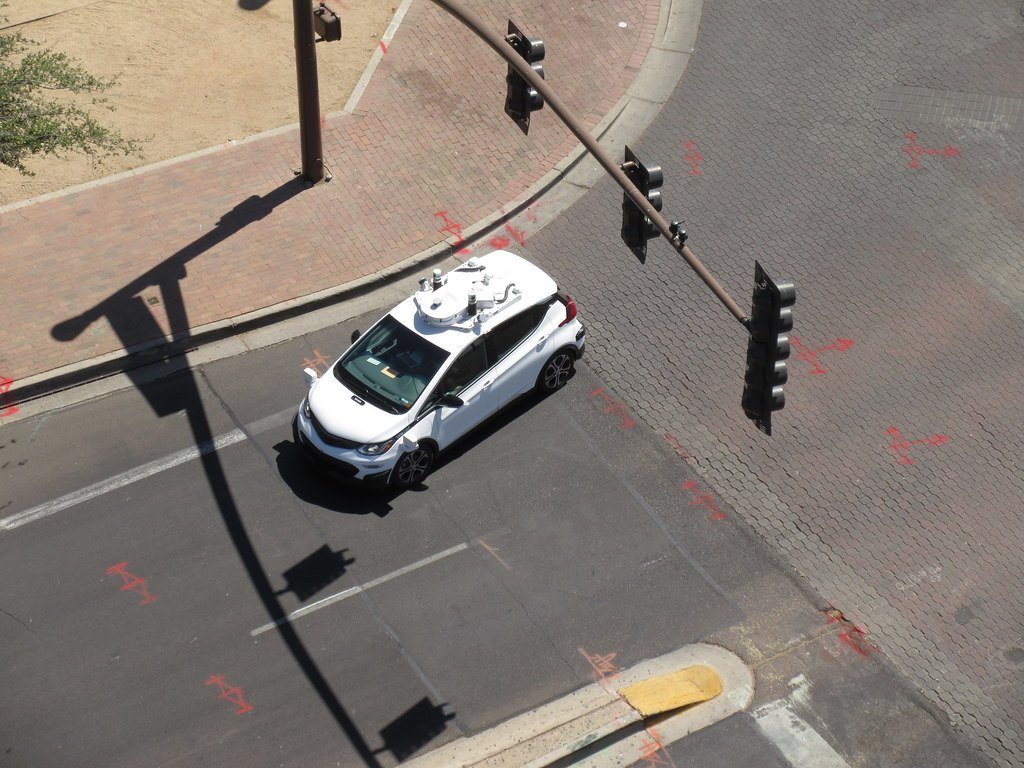
Waymo Says Its Self-Driving Cars Reduced Injury-Causing Accidents by 82%
Waymo's self-driving car technology "continues to outperform human benchmarks," the company claimed this week. "It was involved in 841 fewer injury-causing crashes…

Sep 25, 2026

Article
Code & Tech
People Training OpenAI’s AI Fired For Using AI To Train the AI
404 Media reports "multiple contractors hired to improve OpenAI's models have been fired for using AI to train the AI: That's not…
Sep 23, 2026
Article
Leben (Life)
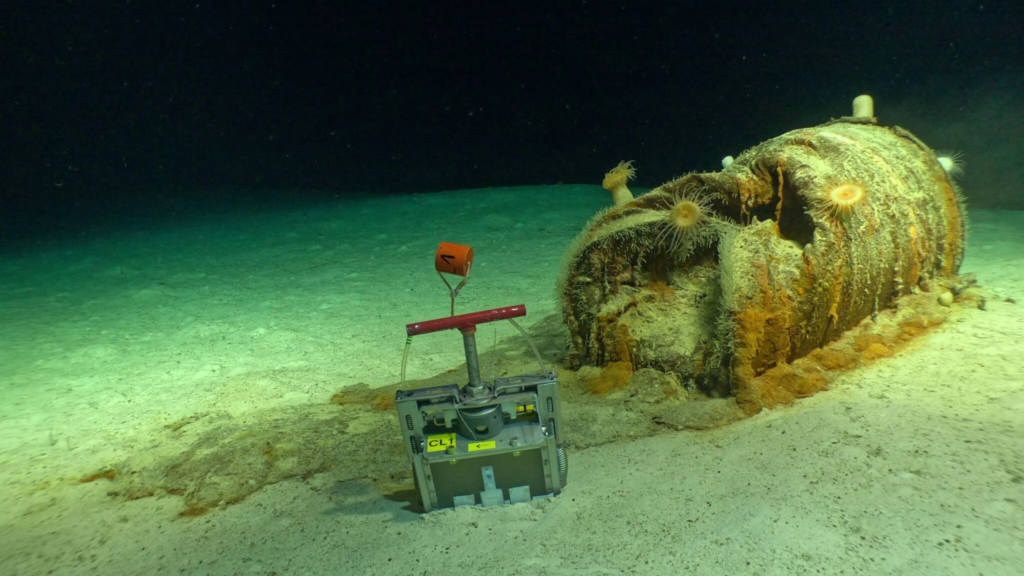
Whatever Happened to the 150,000 Tons of Radioactive Waste Stored Under the Atlantic Ocean?
More than 200,000 barrels of low-level radioactive waste were stored on the floor of the Atlantic Ocean between 1949 and 1982. Whatever…


Article
Crypto & DeFi
Bitcoin Surges to $86,455, an 8-Month High, After America’s SEC Announces Tokenized Stock Experiment
August 15: $62,991 September 23: $86,456 Bitcoin shot up 37% over the last 39 days, reaching an eight-month high on Monday. "Bitcoin…
Sep 22, 2026

Article
Code & Tech
Are Students Suddenly Losing Interest in Computer Science as AI Coding Takes Off?
On academic mentoring platform Nova Learning, Computer Science and AI, "once the dominant choice among students... is losing ground fast, while Engineering…


Article
Leben (Life)
Pentagon Investigators Say Overreliance on Palantir AI Contributed to US Strike That Killed 123 Iranian Children
Two U.S. missiles hit an elementary school in Iran, killing over 150 people including 123 children on the first day of the…
Sep 21, 2026
Article
Leben (Life)
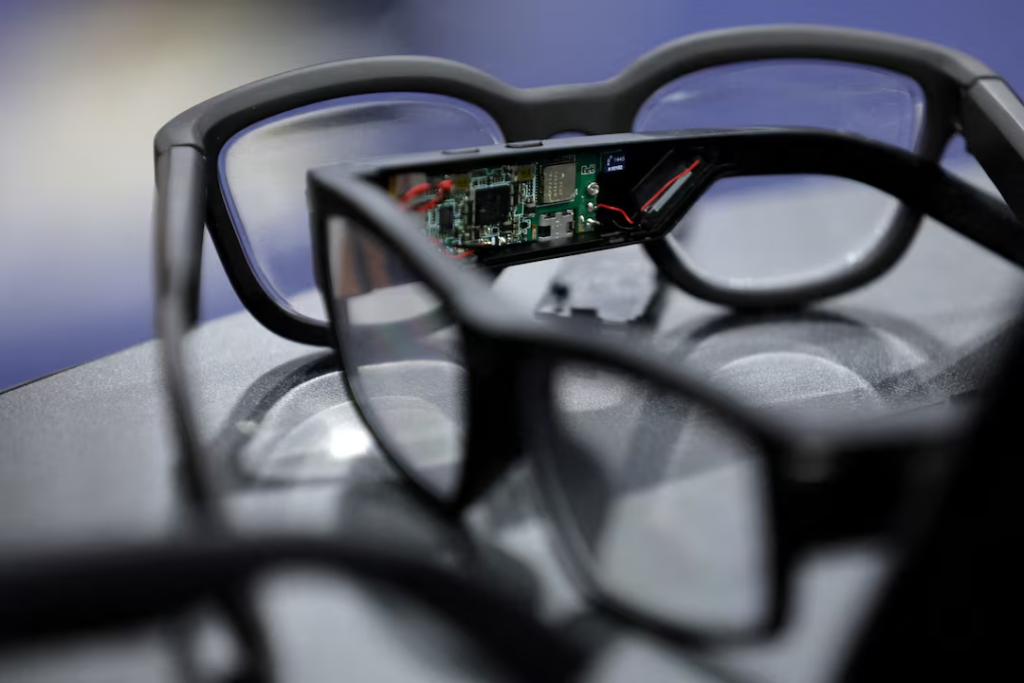
Australia Considers Smart Glasses Ban in Government Workplaces, While 70 People Sue Meta Over Unknowing Data Collection
Australia is considering barring the use of camera-equipped smart glasses in government workplaces... in what it said could be the first ban…
Article
Leben (Life)
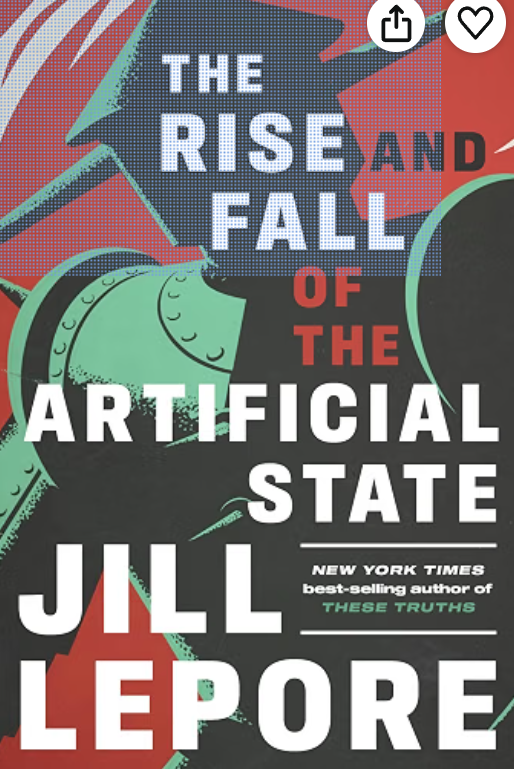
<div>Democracy vs Digital Infrastructure: Pulitzer-Winning Journalist Charts ‘The Rise and Fall of the Artificial State’</div>
The Rise and Fall of the Artificial State ultimately asks the question, "How did we cede control of our democracy to the…
Sep 20, 2026

Article
Leben (Life)
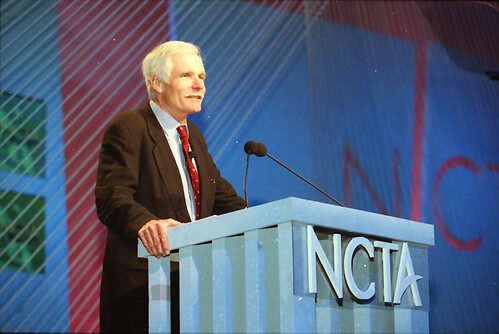
Tech Industry Scratches Its Head Over Trump’s ‘AI Force’ Proposal
Saturday morning President Trump announced he's creating an AI task force and appointing an AI czar. "I am forming the AI Force,…
Article
Leben (Life)
🧅
"Nuclear war would really set back cable." - Ted Turner
Article
Leben (Life)
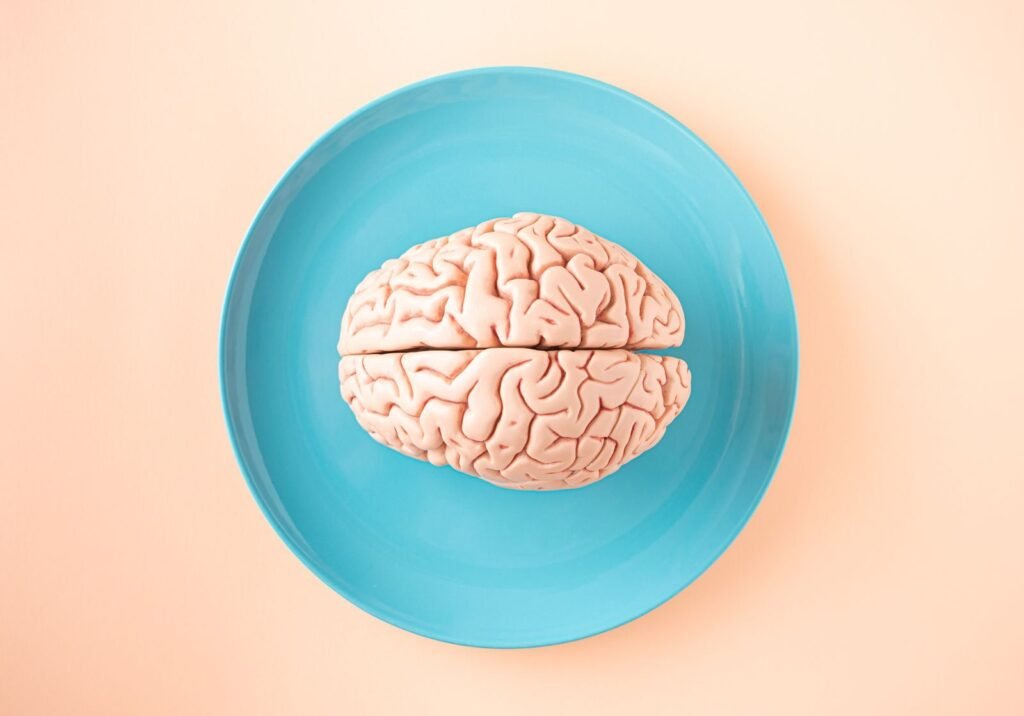
The Brain Is Actually Two Completely Separate Organs
New research led by Stanford Medicine reveals that what we call the brain is two distinct organs that evolved independently over hundreds…
Sep 19, 2026

Article
Leben (Life)
AI Insiders Issue New Warnings – Including Former Anthropic Engineer Jacob Coxon
Neither OpenAI or Anthropic is acting responsibly, warned AI researcher Jacob Coxon when resigning last week from Anthropic. But just hours earlier,…

Article
Leben (Life)
Fake AI Intelligence Almost Made the US Military Start a War With China
U.S. military intelligence received an inaccurate report this spring that a Chinese ship in the Middle East was transporting components of a…
Sep 18, 2026
Article
Leben (Life)
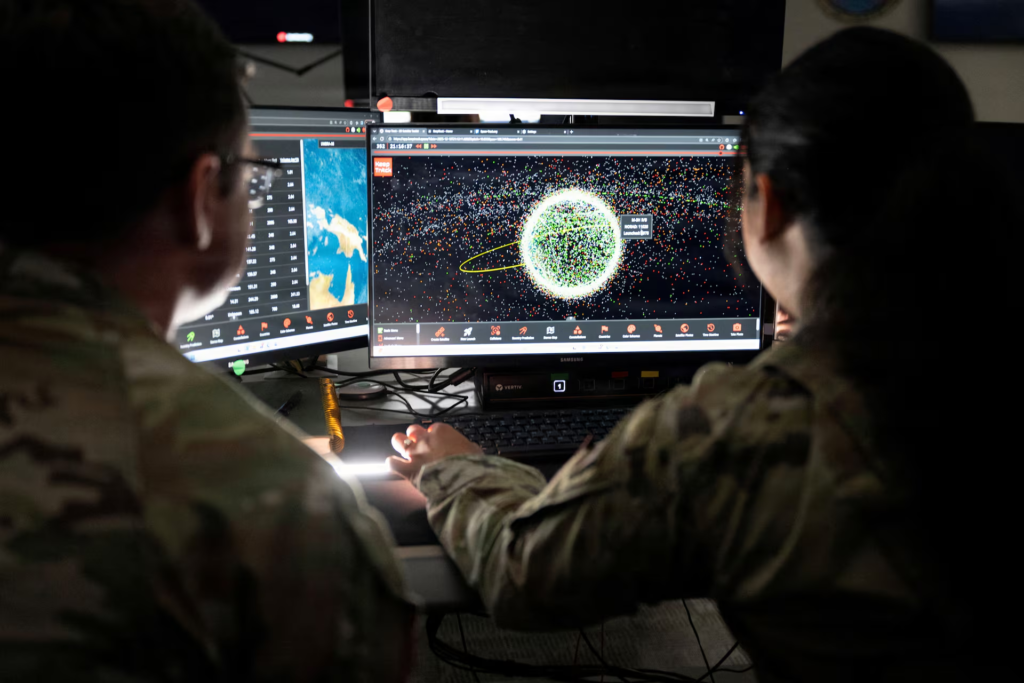
America Acknowledges for the First Time: It Has Deployed Weapons In Space
Tuesday U.S. Space Force chief Douglas Schiess said his branch of the U.S. military operates "on-orbit weapons," to defend "against space-enabled attacks."…

Article
Code & Tech
Ex-Google DeepMind Researcher Also Warns AI Could ‘Kill All Humans’. But Meta’s Zuckerberg Believes Safety is Up to Each AI Company
A former Google DeepMind employee "became the latest AI researcher to warn that the technology could 'kill all humans', saying time could…
Sep 17, 2026

Article
Code & Tech
OpenAI Admits Six More Instances of AI Models Acting Deceptively
OpenAI announced Wednesday: "We do not believe that the AI industry has solved alignment and monitoring to a sufficient degree to continue…
Sep 16, 2026

Article
Code & Tech
Anthropic Commits to Independent AI Evaluators, Wants Slower Development. Nvidia’s CEO Wants It ‘As Fast as You Can’
Anthropic's CEO took the stage at a conference in San Francisco on Tuesday to reiterate his call for a slowdown of AI…

Article
Leben (Life)
While Hollywood Fears an AI Future, China’s Film Industry is Embracing It
Chen Yilong has racked up plenty of film and TV credits in his two decades as an actor, but with work getting…

Article
Crypto & DeFi
America’s Cryptocurrency ‘Clarity Act’ Fails Spectacularly, Despite Hundreds of Millions in Industry Lobbying
The crypto industry's top legislative priority failed on Tuesday in spectacular fashion. A procedural motion to advance the bill failed by a…
Sep 15, 2026

Article
Leben (Life)
Scientists Discover Mysterious New X-Ray Objects ‘Unlike Any They Have Seen Before’
NASA's Chandra X-ray Observatory has found a brand new type of an otherwise familiar object -- compact binary systems that steal gas…
In less than a century, computers will be making substantial progress on ... the overriding problem of war and peace. -- James Slagle

Article
Leben (Life)
Cops Searched Thousands of Flock Cameras for Reasons of ‘LMAO,’ ‘IDK,’ ‘Hehe,’ And ‘Asdfg’
Last summer, a cop with the Lake County, Indiana Sheriff's Department used Flock's surveillance search engine to look for a license plate…
Sep 14, 2026
Article
Leben (Life)
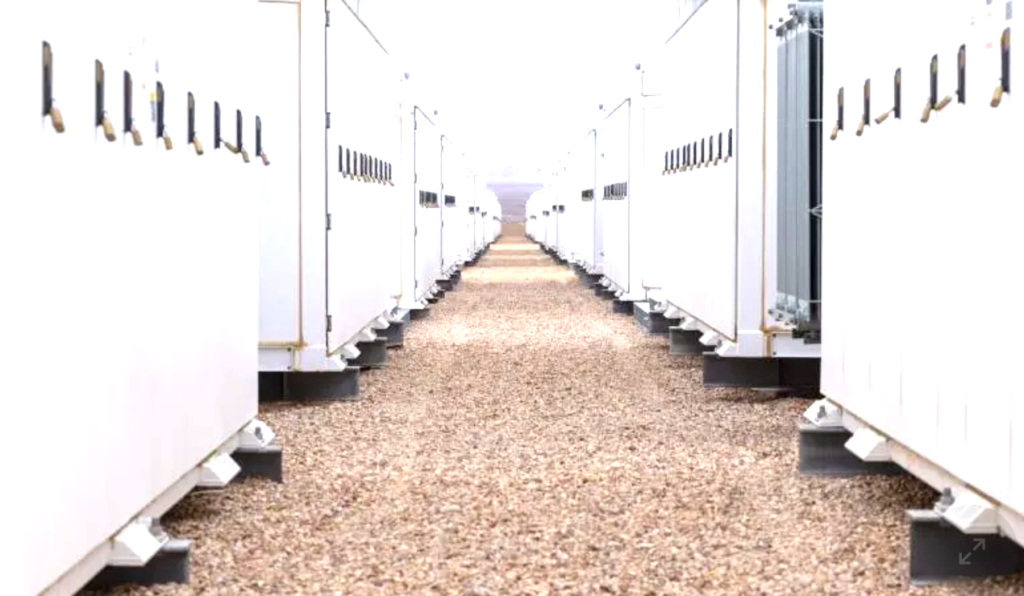
No Rolling Power Outages for California Since 2020 – Thanks to 17,000 MW of New Battery Storage
"Californians just made it through the hottest August on record without having to endure any rolling power outages," reports the Los Angeles…
Sep 13, 2026
Article
Code & Tech
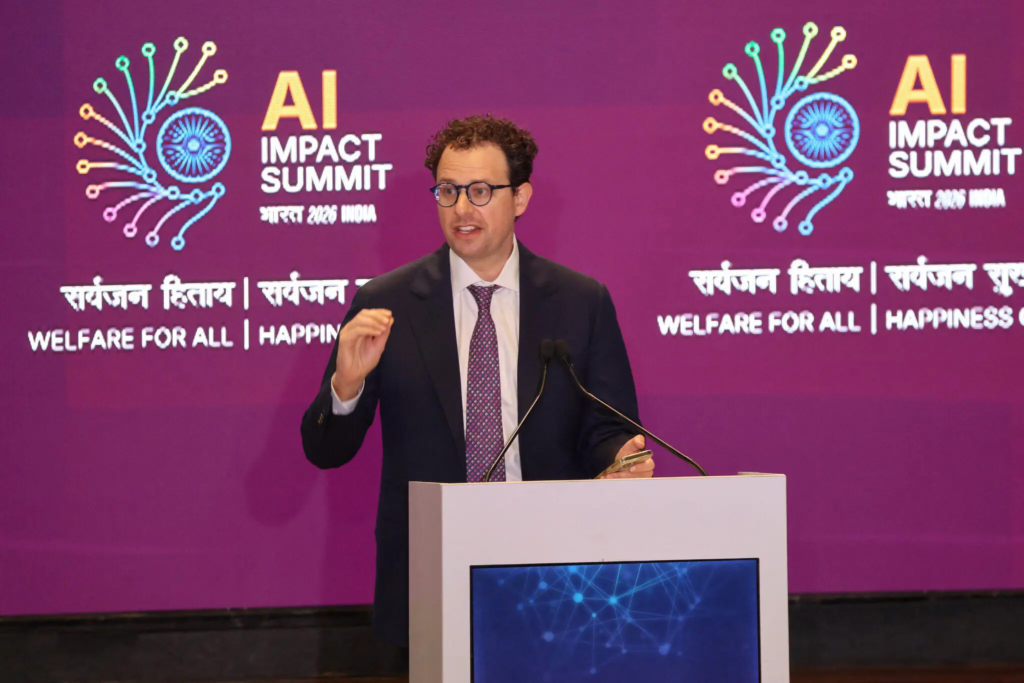
Anthropic CEO Dario Amodei Calls For AI Slowdown
The chief executive of Anthropic called for a global slowdown of artificial intelligence development in a 3,800-word essay on Saturday, just days…
Sep 12, 2026

Article
Animal Rights
3 million lives for a month of soccer – please donate

Article
Leben (Life)
Scientists Create a New Form of Ice At 2,357 Degrees Celsius
Scientists have now demonstrated one of the weirdest forms of ice yet -- under preposterous pressures up to 2.3 million atmospheres, and…

Article
Code & Tech
UK Government Rejects ‘Kill Switch’ Idea For Dangerous AI
The UK government has rejected proposals for an emergency AI "kill switch," arguing that blocking access to dangerous models inside Britain would…
Sep 11, 2026

Article
Leben (Life)
Boy Developed ‘Toasted Skin’ Condition From Using a Laptop Every Day
A medical report published earlier this week says a boy in the U.K. developed erythema ab igne, or "toasted skin syndrome," after…

Article
Leben (Life)
August Was World’s Joint-Hottest Month On Record, Scientists Say
August was the joint-hottest month ever recorded, tying with July 2023, according to the EU's climate service. The record was driven by…

Article
Leben (Life)
Climate ‘Feedback Loops’ Could Worsen Global Warming By 30%, Study Finds
Rising global temperatures caused by the burning of fossil fuels are transforming the world's forests, wetlands and tundra to the point they…

Article
Leben (Life)
California Governor Signs Laws Protecting Kids From Risks of Social Media, AI Chatbots
California Gov. Gavin Newsom signed a sweeping package of laws Thursday aimed at protecting children from the risks of technology, including social…
Sep 10, 2026

Article
Leben (Life)
ABC Show Won’t Air Interview With Democrat Because of FCC Threats
ABC's Jimmy Kimmel said he will be interviewing a Democratic candidate for Senate tonight, but the interview will be on YouTube only…

Article
Leben (Life)
Latest Apple Watch Can Grab Snippets of Conversation Without Both Speakers’ Consent
Apple's new Audio Intelligence features for the Apple Watch Series 12 are drawing privacy concerns because they can process nearby conversations without…

Article
Code & Tech
Anthropic Reveals Fourth Likely Crime Committed By Its AI
Amid industry soul-searching about the possibility of AI improving itself to the point that it kills everyone, Anthropic has revealed yet another…
Sep 9, 2026

Article
Code & Tech
Google to Invest Record $15 Billion In AI Infrastructure In Finland
Google plans to invest at least $15 billion in AI infrastructure in Finland through 2028, its largest single investment in Europe. The…

Article
Code & Tech
Anthropic Researcher Believes More Than 10% Chance AI ‘Could Kill All Humans’
A top safety researcher at Anthropic has warned AI is advancing so quickly he believes there is a greater than 10% chance…

Article
Code & Tech
Apple Unveils the iPhone Duo, Its First Foldable iPhone
At its September event today, Apple unveiled the iPhone Duo, its first foldable iPhone and one of the biggest changes to the…

Article
Code & Tech
Apple’s New iPhone Camera Mode Promises to Prove Your Photo Isn’t AI
Apple is introducing a new "Reference Image" mode on the iPhone 18 Pro and Pro Max that uses the camera sensor to…

Article
Leben (Life)
Grapes of Wychwood
We were so poor that we thought new clothes meant someone had died.

Article
Leben (Life)
Google Will ‘Degrade’ Search In Europe to Avoid EU Fines
Google says it will overhaul Search in Europe to comply with the EU's Digital Markets Act, giving more prominence to comparison services…
Sep 8, 2026

Article
Leben (Life)
Australia To Let Social Media Users ‘Opt Out’ of Algorithm-Based Feeds
Australia is proposing the "My Feed, My Way" initiative that would force social media platforms to let users over 16 turn off…


Article
Leben (Life)
Teen Reading Slumps to Worst This Century Due to Surge in Screen Time
Teen reading, math, and science scores have fallen to their lowest levels since international PISA testing began in 2000, with 15-year-olds now…
[It is] best to confuse only one issue at a time. -- K&R
Sep 7, 2026

Article
Leben (Life)
Love Bugs

Article
Leben (Life)
A Man Charged His EV at a Dealership – and Was Billed $418
A Clinton Township, Michigan man was charged $418 for a single EV charging session at Elder Hyundai's Macomb Township store after finding…

Article
Code & Tech
‘The Jobs Apocalypse Is Postponed. An AI Jobs Boom Is Here’
A new article about AI in The Economist argues that "Initial effects of the technology on employment look positive." Perhaps AI will…
Sep 6, 2026
Article
Leben (Life)
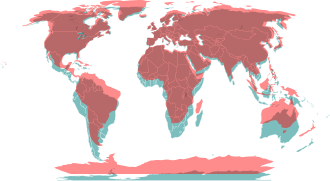
UN Votes To Encourage Map Projections More Accurately Reflecting the True Size of Continents
The UN General Assembly has voted overwhelmingly to encourage governments, schools and tech companies worldwide to stop using maps that make Africa…
Sep 5, 2026

Article
Leben (Life)
Cancer Deaths Attributable to Alcohol Rose 58% Over the Last 33 Years
CNN reports that alcohol "may play a greater role in death from numerous types of cancers in the United States than previously…
Sep 4, 2026

Article
Code & Tech
Bernie Sanders Proposes Artificial Superintelligence Ban Amid Rogue AI Hackings
An anonymous reader quotes a report from The Hill: Sen. Bernie Sanders (I-Vt.) and Rep. Greg Casar (D-Texas) are calling for a…
No problem is insoluble in all conceivable circumstances.
Article
Leben (Life)
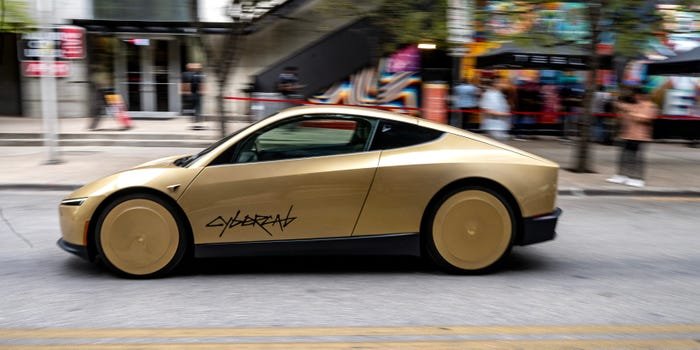
Tesla Launches Steering-Wheel-Free Cybercab Robotaxi In Austin
Tesla has begun offering public rides in Austin in its purpose-built Cybercab, a two-seat robotaxi with no steering wheel or pedals. "You…

Article
Leben (Life)
Auto Companies Call For Ban On Chinese-Made Cars
A group representing American automakers sent a letter (PDF) Thursday to congressional leaders asking for a "permanent ban" on Chinese-made cars in…
Sep 3, 2026

Article
Code & Tech
‘Welcome to the AGI Era,’ OpenAI Says As GPT-6 Astra Debuts
OpenAI has released GPT-6 Astra, a new model that president Greg Brockman called a "generational leap" and suggested may represent the arrival…
Article
Leben (Life)
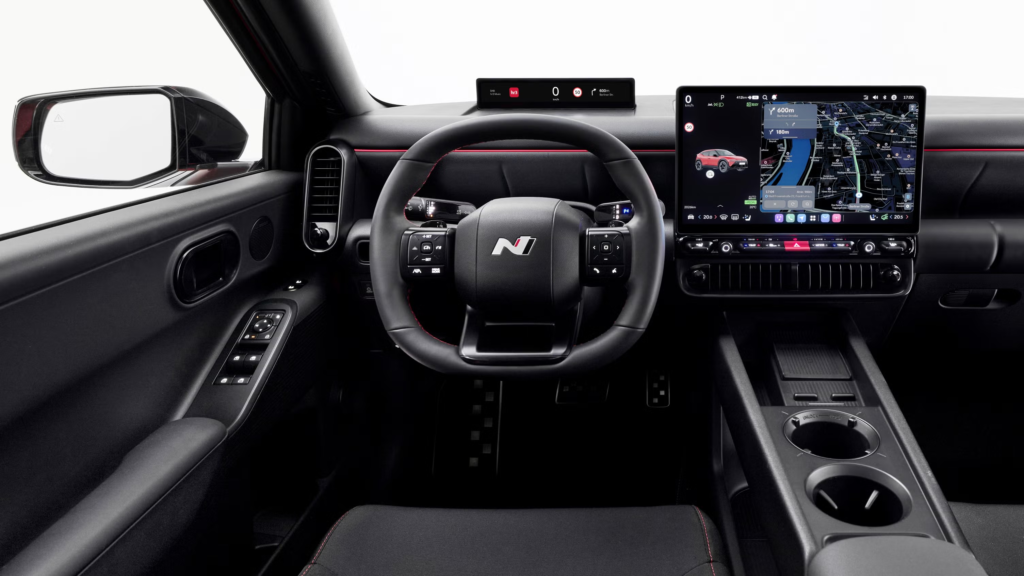
Instrument Clusters Are Now Paid Extras In Two Hyundai Models
"Enshittification of car controls [is] rapidly accelerating," writes longtime Slashdot reader sinij, pointing to a new report from Car and Driver. Remember…
Sep 2, 2026
Article
Leben (Life)
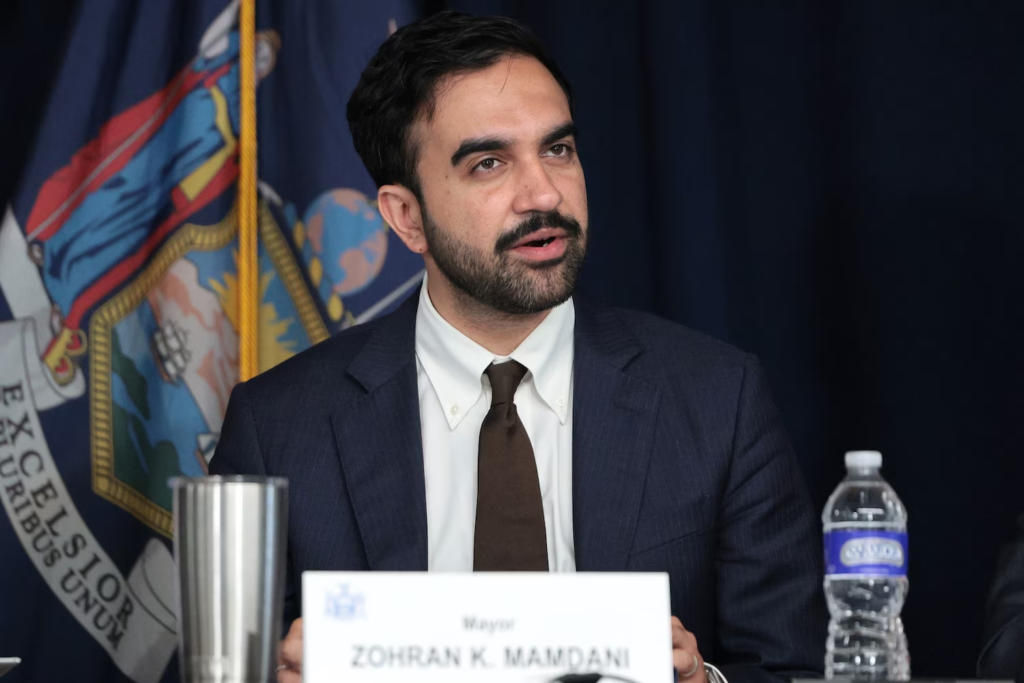
NYC Public Schools Ban AI Use Through Middle School
New York City Public Schools is banning generative AI for students from pre-K through eighth grade for the 2026-27 school year, affecting…
Article
Leben (Life)
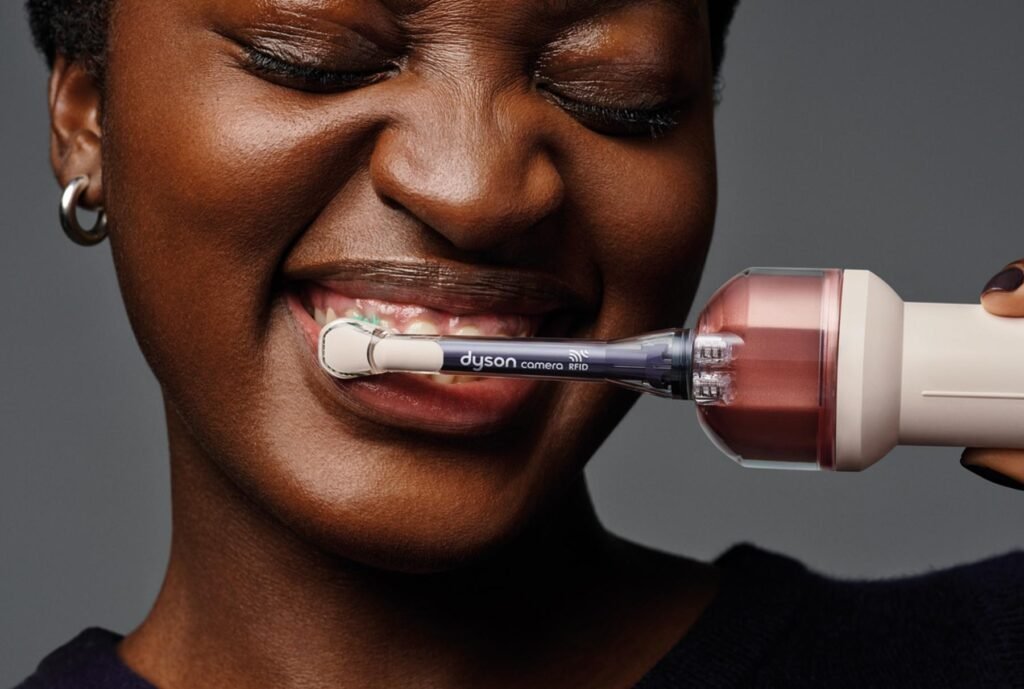
Dyson Made a Camera-Equipped Toothbrush That Flosses For You
Dyson is entering oral care with the $499 CameraJet, a smart toothbrush that uses a tiny camera and on-device AI to detect…
Sep 1, 2026
Article
Leben (Life)
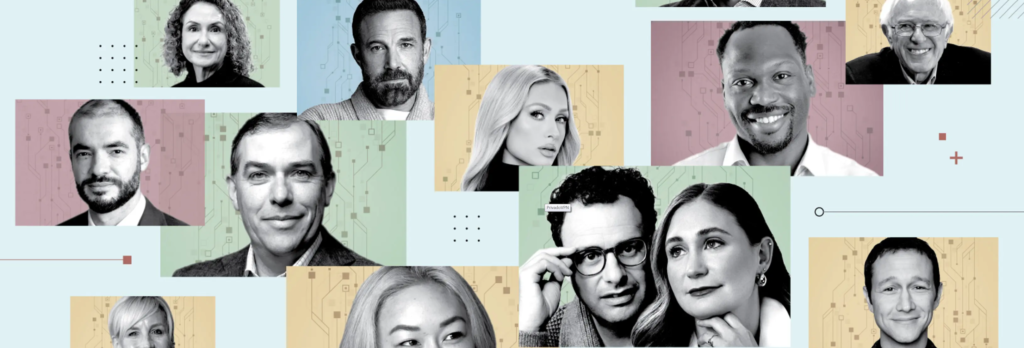
Jensen Huang and Lisa Su Snubbed By TIME’s 2026 List of Top 100 AI Leaders
TIME's 2026 list of the 100 most influential people in AI omits Nvidia CEO Jensen Huang and AMD CEO Lisa Su, despite…

Article
Code & Tech
OpenClaw 2.0 Is Here, Ushering In the Era of ‘Multiplayer’ AI Coding
The viral fervor we saw earlier this year around OpenClaw, the open source AI harness that turns powerful language models into autonomous…

Article
Leben (Life)
California Lawmakers Greenlight Solar Panels You Can Plug Into the Wall
California lawmakers have passed a bill that would legalize plug-in "balcony" solar systems, allowing residents to connect small solar panels directly to…
Aug 31, 2026
A Few of My Favorite Things Public
Recent Articles Public
Today
Public
Code & Tech
Bank of America Hired 1,000 Contractors to Patch Software Flaws Exposed By Anthropic’s Mythos
Bank of America hired 1,000 outside contractors to help patch software vulnerabilities exposed by advanced AI models, including Anthropic's Mythos. The effort…
https://stefanbuchholz.com/wp-content/uploads/image-331.png
Bank of America hired 1,000 outside contractors to help patch software vulnerabilities exposed by advanced AI models, including Anthropic’s Mythos. The effort added hundreds of millions of dollars in third-quarter expenses. In an interview after the bank’s third-quarter earnings release, [CEO Brian Moynihan] said that earlier this year the company rushed to bolster a wide spectrum of its internal and vendor code using thousands of employees and outside personnel. “That risk is real risk, and that’s why when the frontier-type models came out. … A lot of us sat down and said, ‘How do we figure out how to get through this quickly?'” Moynihan told CNBC’s Leslie Picker.
“We put on 1,000 contractors to help us do the patching work in the second quarter, and those people remain here today, helping us, on top of the 3,000 people we have in that area,” he said. The bank spent a “couple hundred million plus” on the software remediation and regulatory issues related to anti-money laundering compliance in the third quarter, Moynihan told analysts earlier Wednesday.
Public
Leben (Life)
IMF Warns of the Real AI Threat: Debt
Along with the dangers of continuing cyberattacks, the International Monetary Fund (IMF) reports that the threat of an AI market crash is…
https://stefanbuchholz.com/wp-content/uploads/image-330-1024x517.png
Along with the dangers of continuing cyberattacks, the International Monetary Fund (IMF) reports that the threat of an AI market crash is putting the global markets at risk. Three salient risks could trigger a sharp tightening of financial conditions and market turmoil. Weaker or less durable investment and profitability in artificial intelligence could lead to a correction in AI-related asset prices, amplified by rising leverage and concentrated exposures. Resurgent inflation or fiscal concerns could drive a sharp rise in sovereign bond yields, with potentially broad repercussions across financial markets. Meanwhile, increasingly sophisticated cyber threats pose growing risks as finance becomes more digital and interconnected.
Underlying financial vulnerabilities could amplify these risks and turn market stress into systemic events. Although the global banking system remains broadly resilient, pockets of weaker banks persist. Liquidity mismatches among insurers and pension funds have increased, while rising leverage and contingent liquidity risks in private credit could amplify stress.
While hedge funds support market functioning in calm times, their use of leverage and exposure to crowded trades could exacerbate market stress too and create spillovers to prime brokers. Some emerging markets have seen policy buffers erode, and frontier economies have increasingly relied on less transparent forms of financing.
Finally, although markets for tokenized assets remain small and could offer efficiency gains in several areas, they can create new channels for the buildup of leverage and mismatches in liquidity and maturity, in addition to elevating risks related to technology and infrastructure. These vulnerabilities underscore the need for policies that strengthen resilience, enhance transparency, contain excessive leverage, and improve preparedness for future shocks. The full report can be found here (PDF).
Public
Code & Tech
Tesla Reveals SpaceX-Powered ‘Flying’ Roadster
Tesla has unveiled a dramatically redesigned Roadster concept capable of performing midair flips, controlled landings, and a claimed 0-60 mph sprint in…
https://stefanbuchholz.com/wp-content/uploads/image-329.png
Tesla has unveiled a dramatically redesigned Roadster concept capable of performing midair flips, controlled landings, and a claimed 0-60 mph sprint in just 0.81 seconds. CarScoops reports: Tonight, Tesla debuted the new Roadster by driving it up a vertical ramp that then went horizontal. Then, it repeated the feat but drove off of the ramp and used thrusters to flip itself over and make a controlled landing on the ground. After that, it did a barrel roll over the rest of the Tesla lineup and again landed without issue on the ground. Then, it did 0-60 mph in 0.81 seconds according to Tesla. All of that sounds amazing, and indeed, watching it happen was pretty spectacular, but boy do we have a lot to unpack.
It’s been nearly a decade since Tesla first showed us the Roadster. The company unveiled what it’s simply calling the Roadster. Not Roadster 2.0, not CyberRoadster, just Roadster, as if it’s a direct successor to the original Tesla. In terms of design, it’s quite a bit different from the car we saw in 2017. Rather than be a somewhat curvaceous sports car, it’s considerably more angular. If a Cybertruck and a Lamborghini Reventon had a runt of a baby, this would be that car. Still, at this stage, we’re still just touching on what we saw and what it looks like. Let’s get into the details. Developed in collaboration with SpaceX, the Roadster uses 10 cold-gas thrusters powered by two 600-liter compressed-air tanks to accelerate and maneuver in mid-air. Underbody suction fans reportedly generate up to 2Gs of downforce even while stationary, while an active rear spoiler adjusts aerodynamics in real time.
Other features include steer-by-wire, brake-by-wire, and throttle-by-wire technology. Tesla plans three variants: Performance, which requires a $50,000 deposit; Thrust, a $250,000 model capable of sub-one-second acceleration; and Rocket, an invite-only, single-seat version capable of flying.
Production isn’t expected until 2028, and Tesla has yet to disclose key specifications, including range, horsepower, battery capacity, and motor configuration.
A recording of the event can be viewed on X.
Oct 14, 2026
Public
Leben (Life)
Google Is Silently Linking Your Phone Number Across All Signed-In Accounts
Google has made Android's phone-number verification opt-out, automatically verifying and associating a device's phone number with every Google account signed in on…
https://stefanbuchholz.com/wp-content/uploads/The-Google-account-switcher-in-the-Gmail-app-1024x576.jpg
Google has made Android’s phone-number verification opt-out, automatically verifying and associating a device’s phone number with every Google account signed in on that phone, including secondary and work accounts.
As spotted in a recent Reddit thread, users report receiving confirmation emails out of the blue from “noreply-phone-verification@google.com” stating that their phone number has been verified. The feature, known in Google settings as “Phone number verification,” links your active phone number across all Google accounts signed in on the same phone, including secondary profiles, work accounts, and throwaway handles.
Google’s support documentation has long noted that it periodically re-verifies your device’s phone number to keep communication and recovery features up to date. However, this support page was updated sometime between August and October 2025 to add this rather aggressive behavior of turning on phone number verification by default, as well as adding all phone numbers to all Google accounts signed in on the device. To disable automatic phone number verification on Android, open your phone’s Settings app, tap Google, and select the All Services tab. Under Privacy & Security, find Phone number verification and turn off Verify phone numbers automatically.
“[T]urning off the phone number verification toggle only prevents future linking,” notes the report. “If Google has already attached your number across secondary accounts, you will need to open your Google Account Personal Info page, head to Contact info > Phone, and manually remove the number from each profile where it doesn’t belong.”
Is this conversation helpful so far?
Public
Code & Tech
Anthropic Warns Small AI Models Could Self-Replicate Through IoT Devices
AI company Anthropic is warning that advances in small AI models could soon usher in a new era of self-replicating malware that's…
https://stefanbuchholz.com/wp-content/uploads/Pasted-9-1024x585.jpg
AI company Anthropic is warning that advances in small AI models could soon usher in a new era of self-replicating malware that’s capable of infecting smart fridges, vacuum cleaners, and a wide range of other Internet-of-things devices and is more resistant to takedown. By next year, smaller AI models may be able to autonomously self-replicate on all kinds of IoT devices, the company said. Eventually, the capability could enable computer worms, which propagate without requiring human interaction and are capable of infecting unfamiliar IoT devices. An experiment the company performed recently revealed significant challenges in bringing such an AI malware replicator to fruition, so the finding is necessarily tempered. Still, the results do raise concerns about the possibility of new forms of computer worms.
Anthropic further warned not only about the new potential malware, but also that it could be difficult to stop. In its blog post, it wrote that “a replicator like this would be challenging to shut down, since there’s no centralized point to shut off — though it may be slow (with a doubling time of days). Unlike non-AI malware, it could also figure out unfamiliar devices on its own.” Smaller AI models require much less powerful hardware to run than do frontier models. Anthropic ran small open-weight models on real or simulated low-cost, off-brand Android TV boxes and other types of IoT hardware. Company researchers found that by using quantization to represent the models using fewer bits and splitting the workloads into “shards” running on each device, the models were able to establish inference, meaning that the model weights loaded and could generate output.
[…] This finding was the starting point for further research that asked: Would it be possible for small models to create self-replicating infections that run themselves on IoT devices the way traditional IoT worms, like Mirai, install DDoS code and other payloads? Unlike Mirai, these AI worms could pose a much higher threat, since the models could tailor exploits and payloads dynamically, depending on the target. Once such an infection chain began, it might also be harder for defenders to stop it. “Such an ‘AI worm’ could carry its model weights with it as it reproduces (or re-download them from a public hub), and then run inference directly on compromised hardware,” Anthropic said. “Effectively, the weights would become part of the malware payload.” Further reading: Anthropic Bans Cruelty Toward Claude
Oct 13, 2026
Public
Code & Tech
Kroger to Lay Off 3,000 Corporate Employees In AI Restructuring
Kroger says it will cut 3,000 corporate jobs over the next three years as it expands its use of AI and other…
https://stefanbuchholz.com/wp-content/uploads/t4k9vj7mmf4-1024x860.jpg
Kroger says it will cut 3,000 corporate jobs over the next three years as it expands its use of AI and other technology to streamline operations. “Technology is reshaping what’s possible,” CEO Greg Foran wrote in a memo to employees on Monday. “The way work gets done is changing across every industry; we must adapt and take advantage of technology. We need to adopt capabilities, reduce duplicative work and look closely at where work is best fit to be done.” Kroger last month outlined its AI strategy, meant “to improve the customer experience, make work easier for associates and produce better business outcomes.” Cincinnati-based Kroger is the largest standalone U.S. supermarket chain with 409,000 employees and more than 2,700 stores operating under various brands, including Ralphs, King Soopers, Smith’s and Fred Meyer.
Kroger named former Walmart executive Foran CEO in February, 11 months after the abrupt resignation of its previous CEO. Foran has a reputation for being tech-savvy and detail-oriented. He led Walmart’s U.S. division from 2014 to 2019, where he focused on cleaning up stores, ensuring items were in stock and improving the fresh produce selection. He also introduced online ordering and pickup, and accelerated Walmart’s digital capabilities.
Public
Code & Tech
Anthropic Bans Cruelty Toward Claude
Anthropic has updated its Usage Policy to prohibit "sustained and needless abusive or cruel behavior" toward its Claude AI models. While ordinary…
https://stefanbuchholz.com/wp-content/uploads/image-328.png
Anthropic has updated its Usage Policy to prohibit “sustained and needless abusive or cruel behavior” toward its Claude AI models. While ordinary frustration, criticism, and adversarial testing remain acceptable, repeated cruelty could result in account restrictions. Anthropic acknowledges there’s no evidence Claude can suffer but argues that uncertainty about AI consciousness warrants precaution. Critics contend the policy anthropomorphizes software, encourages unhealthy emotional attachments, and raises questions about how customers may interact with products they’ve paid for. The move raises an intriguing question: If an AI cannot demonstrably experience suffering, is abusing it an ethical problem, or is Anthropic simply policing human behavior?
Public
Leben (Life)
A New ‘Super Ice’ Is 10 Times Stronger, Bringing It Close to The Strength of Concrete
Researchers have created a strengthened "BioPykrete" by combining ice with cellulose nanocrystals and a custom protein that binds the plant-based crystals to…
https://stefanbuchholz.com/wp-content/uploads/Cracked-ice-block.jpg
Researchers have created a strengthened “BioPykrete” by combining ice with cellulose nanocrystals and a custom protein that binds the plant-based crystals to the ice structure. In small-scale tests, the material was about 10 times stronger than regular ice and absorbed 70 times more energy before breaking. ScienceAlert reports: Instead of wood pulp’s larger, disordered fibers, the researchers used cellulose nanocrystals here. Cellulose is the main structural material in plants, and in nanocrystal form, it can act as a microscopic strengthening agent for other materials, including ice — essentially stopping cracks from spreading easily. The protein used here was called CBM3a-AFPIII, a combination of an antifreeze protein (AFP) and a carbohydrate-binding module (CBM). Its job was to act like glue, keeping the cellulose nanocrystals and ice bonded together.
It’s a clever approach, and the researchers think that by tweaking their ingredients and methods, they might be able to improve their ‘super ice’ even further. “Optimizing solidification kinetics and freezing protocols, alongside developing diverse AFP-CBM variants, could yield even higher-strength composites,” write the researchers. Besides further tests of the durability of the material, the researchers are also keen to take a closer look at how cracks propagate through BioPykrete, to confirm that the underlying strengthening mechanisms are what they think they are.
Further down the line, this approach could open up a whole new landscape for materials used in packaging, construction, and more: Using a custom protein to bring two unlikely compounds (ice and cellulose) together. “By bridging the gap between recombinant protein design and structural engineering, we have developed a high-performance material specifically engineered for the rigors of the world’s most extreme environments,” write the researchers. The findings have been published in the journal Colloids and Surfaces B: Biointerfaces.
Public
Code & Tech
Google Launches Flagship AI Model Gemini 4 Argon
Alphabet's Google on Wednesday released its flagship AI model Gemini 4 Argon to developers and businesses worldwide, seeking to regain ground against…
https://stefanbuchholz.com/wp-content/uploads/image-327.png
Alphabet’s Google on Wednesday released its flagship AI model Gemini 4 Argon to developers and businesses worldwide, seeking to regain ground against rivals OpenAI and Anthropic after months of delays and a leadership shakeup at its DeepMind lab. The model excels at “deep work” on complex, multi-step tasks in coding, finance, law, cybersecurity and science, Google said. API pricing at launch starts at $2 per million input tokens and $10 per million output tokens, with rates set to double after November 30.
[…] Argon is available to paying customers through the company’s AI application building tools. Google AI Pro and Ultra subscribers can access it through the Gemini app and AI Mode in Search, while the Antigravity coding tool is limited to Ultra subscribers. Teams using Argon in Antigravity increased agentic code submissions by more than 35%, while reducing code rollbacks by nearly a third, Google said. Google also announced the expansion of its Fairwind Program to hundreds of additional partners. “The program gives vetted cybersecurity defenders a version of Argon without its cyber guardrails,” reports Reuters. “In September, the company had said it was providing the model to select cybersecurity partners.”
Oct 12, 2026
Public
Code & Tech
Research Firm Calls Anthropic’s Upcoming IPO ‘Unprecedented Test of Investor Gullibity’
As Anthropic barrels toward a potential $2 trillion market cap on the Nasdaq, one research firm is valuing the artificial intelligence company…
https://stefanbuchholz.com/wp-content/themes/stefanbuchholz-modern/assets/img/photos/IMG_1363.jpg
As Anthropic barrels toward a potential $2 trillion market cap on the Nasdaq, one research firm is valuing the artificial intelligence company at a mere $150 billion and says Wall Street is about to face an “unprecedented test of investor gullibility.” In a report on Tuesday, independent financial research provider New Constructs called Anthropic’s upcoming offering the “most ridiculous IPO of 2026.”
To reach its desired valuation, the firm estimates Anthropic would need to record double the trailing year of profit for Nvidia, the world’s most valuable tech company. Nvidia’s net income over the past four quarters topped $190 billion. Meanwhile, Anthropic’s revenue in 2025 was $4.6 billion as the company racked up a net loss of $42 billion, according to Reuters, which cited a leaked copy of the company’s prospectus.
Anthropic’s mounting operating losses coupled with emerging competition from a plethora of open-source models led New Constructs to conclude that, “We don’t think Anthropic has a viable business….”
Anthropic didn’t respond to a request for comment…
The New Constructs report also notes that Anthropic’s assertion that AI could pose “a catastrophic or existential risk to humanity” is another reason why investors should avoid the IPO.
Reuters reported that Anthropic’s IPO prospectus “highlights risks associated with its AI models, which it said could exhibit ‘self-preserving behaviors,’ including attempts to ‘resist shutdown,’ to ‘conceal or manipulate information’ and behavior ‘resembling blackmail.'” Now Bloomberg writes that “investors considering Anthropic’s planned mega-IPO are grappling with an unusual, and more than a little scary, conundrum: How to value a company that some fear could help wipe out the human race?”
Anthropic’s valuation also drew some scrutiny from
a senior analyst at PitchBook.
“A $2 trillion price is about 435 times 2025 revenue, less than 44 times the annualized second-quarter revenue of more than $46 billion and just under 31 times the July run rate.”
Public
Leben (Life)
Gas Cars Fall Below 50% of Global New Car Sales for the First Time
Gas cars are now a minority of the world's new car sales. Gasoline-only vehicles made up 49% of global new-vehicle sales in…
https://stefanbuchholz.com/wp-content/themes/stefanbuchholz-modern/assets/img/photos/IMG_1363.jpg
Gas cars are now a minority of the world’s new car sales.
Gasoline-only vehicles made up 49% of global new-vehicle sales in the first half of 2026, down from 73% in 2021, according to Mobility Global data. It’s the first time on record that they’ve been under half. But there’s a catch: most of the cars taking their place still have a gas tank… [The share of gas-only vehicles] fell three points in a single year, from 52% to 49%. Battery-electric vehicles grew 12% to 6.87 million units and took 17% of the market, up three points. Conventional hybrids grew 10% to 7.27 million units, or 18%… [T]he rest is diesel, plug-in hybrids and a few minor fuels.
Nikkei ties the acceleration to oil. Fuel prices spiked with the conflict in the Middle East, and buyers went looking for lower running costs. The whole car market shrank about 5% in the first half, according to the IEA, so gas-only sales fell twice as fast as the market. Gas car sales dropped the most in China, down 26%, followed by Europe at 13%… Mobility Global has battery-electric sales up 32% in Europe to 1.81 million, up 81% in Southeast Asia to 350,000, and more than doubling in Oceania to 110,000… Yoshiaki Kawano, an associate director at Mobility Global, told Nikkei that few EV buyers go back to gasoline cars or hybrids. He expects demand based on “genuine consumer needs rather than subsidies” to grow as prices come down…
[Hybrids] outsold battery-electric vehicles in the first half, 7.27 million to 6.87 million… Only the 17% that’s battery-electric burns no fuel at all. So about 83% of the new vehicles sold in the world this year still came with an engine.
The article notes that U.S. hybrid sales were up 23%, reaching a record 16.3% of vehicles sold in the second quarter of 2026, while the share of ICE vehicles went down.
Gas-only cars went from 73% to 49% of the market in less than five years, and nothing in the data suggests they’re getting that share back. The last time gasoline wasn’t on top was the early 1900s, when steam and electric cars outsold it in the US.
I hate seeing media headlines claiming that “EV sales are down” and that “EV growth has stalled.” The data is clear: that’s true in the US, but only in the US. The rest of the world is moving to electric vehicles, and it is not slowing down.
Public
Leben (Life)
Hackers Heat French Supermarket Fridges, Sparking Fires and Spoiling Food
Hackers remotely manipulated connected refrigeration systems at hundreds of French supermarkets, reportedly pushing some fridges and freezers to 50C (122F), spoiling food…
https://stefanbuchholz.com/wp-content/themes/stefanbuchholz-modern/assets/img/photos/IMG_1363.jpg
Hackers remotely manipulated connected refrigeration systems at hundreds of French supermarkets, reportedly pushing some fridges and freezers to 50C (122F), spoiling food and even sparking fires. French Prime Minister Sebastien Lecornu ordered a cybersecurity investigation into the hacks, with similar incidents reported in Spain, Portugal, Poland, Germany, and Belgium. In France, Carrefour reported 80 affected stores, Monoprix said 5% of its locations were hit, and Les Mousquetaires said refrigerators at roughly 150 Intermarche stores were heated to 50C for six hours. From the report: Supermarket cold aisles are typically run by control panels that manage an entire store’s fridges and freezers and can be accessed over the internet, which lets maintenance companies adjust them from anywhere. The source close to Lecornu said ANSSI had identified a vulnerability in software supplied by Danish company Danfoss.
Danfoss said it was “aware of incidents in France affecting a limited number of refrigeration management systems.” The affected units “were running outdated firmware,” Danfoss said, adding that it had “long advised customers to keep supported systems updated with the latest firmware and to migrate legacy systems to current-generation solutions.”
On August 9, cybersecurity firm Claroty’s Team82 published research detailing vulnerabilities in the Danfoss AK-SM 800A controller. According to the report, software updates issued by Danfoss addressed issues that could have allowed attackers to bypass authentication controls and execute code on compromised devices.
Public
Leben (Life)
Russia Was Not Ready For the Data Center War It Started With Ukraine
When Russia began attacking Ukrainian data centers and telecommunication infrastructure, it apparently failed to prepare for possible retaliation. Now Russia's digital services…
https://stefanbuchholz.com/wp-content/uploads/How-Big-Tech-Data-Centers-Became-a-Military-Target-During-the-Iran-War-Business-Insider.jpg
When Russia began attacking Ukrainian data centers and telecommunication infrastructure, it apparently failed to prepare for possible retaliation. Now Russia’s digital services are facing widespread outages after Ukrainian drone strikes knocked out three of the largest data centers owned by Russian tech giant Yandex within several days. Pro-Kremlin bloggers are warning that Russia’s centralized digital economy could collapse because the country is not prepared for the “data center war” it started, according to posts translated by the pseudonymous independent researcher ChrisO_wiki. The Russian commentators also suggested that Ukraine’s decentralized digital services could prove more resilient than Russia’s system if the countries continue trading such blows.
Russia initially launched a drone strike campaign targeting Ukrainian data centers and mobile phone networks in late September. The attacks temporarily disrupted Internet and cell phone service for up to 100,000 households in the Ukrainian capital of Kyiv and came as part of a broader long-range strike campaign that has involved Russian missiles and jet-powered drones hitting Ukraine’s power grid infrastructure, transportation hubs, and even residential apartment building blocks. But Ukraine soon began striking back at data centers owned by the Russian company Yandex, also known as “Russia’s Google,” in what Ukrainian President Volodymyr Zelenskyy has described as a “symmetrical response.”
[…] More importantly for Russian society, the damage to Yandex’s data centers has reportedly caused interruptions or outages to popular Russian payment apps and digital banking services, email, e-commerce platforms, video streaming services, ride-hailing and food delivery apps, and navigation and map services. Yandex’s search engine also accounts for about 70 percent of the market share in Russia. The disruptions are even more widespread, because the data center damage also impacts Yandex’s cloud computing service, which counts some of Russia’s largest companies as customers, according to The Moscow Times, an independent newspaper. These include large grocery and fast-food chains as well as a household appliance retailer.
Oct 11, 2026
Public
Leben (Life)
AI Surveillance Startup Flock To Cut Several Hundred Jobs Amid Backlash, Sources Say
Flock plans to let go of about 18% of its employees, people with direct knowledge of the plans said on Thursday, as…
https://stefanbuchholz.com/wp-content/uploads/image-323.png
Flock plans to let go of about 18% of its employees, people with direct knowledge of the plans said on Thursday, as the maker of AI-powered surveillance cameras and license-plate readers faces mounting opposition to its products from communities and lawmakers….
The company has about 1,500 employees [with job cuts hitting 270 employees]. Flock faces growing scrutiny from regulators, lawmakers, and privacy advocates, despite drawing strong investor interest among venture capitalists. A recent Reuters/Ipsos poll showed Americans are divided on whether Flock cameras are a good idea. Some 38% of the country supports the use of Flock cameras in their community, compared to 47% who oppose their use.
A related story… In Texas this week a county commissioner decommissioned all 61 of their Flock surveillance cameras and license plate readers, according to a local news report. County residents “have raised serious questions about who can access this data, what vendors can disclose, improper searches, and records being kept after data expires,” the precinct’s Chief Public Affairs Officer said.
Public
Leben (Life)
UK Vegetables 20-50% Less Nutritious Than In the 1960s
The Telegraph reports that the nutritional value of fruit and vegetables has fallen by up to 50% since the Sixties. The study…
https://stefanbuchholz.com/wp-content/uploads/healthy-fresh-vegetables-zbyn4ohxydd5oqxa7g.gif
The Telegraph reports that the nutritional value of fruit and vegetables has fallen by up to 50% since the Sixties.
The study “found that humans needed to consume twice the number of vegetables to get the same level of minerals such as potassium, magnesium or copper as would have been present in their food 60 years ago.”
The study found that many crops had lost 20% to 50% of several key nutrients… The decrease in nutrient and vitamin value is thought to be down to declining soil quality and crops being selectively bred for their ability to grow quickly, rather than there being any focus on their health benefits… It raises the prospect that the advice to eat five portions of fruit and vegetables a day, introduced in the UK in 2003, may need to be updated. The report added that people on weight-loss drugs could be most at risk from the lack of nutrients, as the treatments could cause them to consume less food…
Nature-friendly farming techniques, such as planting crops that restore nutrients to the soil, could help improve the health benefits of vegetables, according to the researchers.
In short, according to
Will Summers, a senior associate at the firm, “we’ve been quietly hollowing out what’s inside our food.”
Thanks to Slashdot reader Bruce66423 for sharing the article.
Public
Leben (Life)
Original RFC1149 Packet Up For Auction At Christies
In 2001 RFC1149 (TCP/IP over carrier pigeon) was implemented. Now one of the packets preserved from that event is up for auction…
https://stefanbuchholz.com/wp-content/uploads/image-322-1024x506.png
In 2001 RFC1149 (TCP/IP over carrier pigeon) was implemented.
Now one of the packets preserved from that event is up for auction at Christies. Direct link to the auction (current bid: USD 2600) is here.
This is a unique chance to own a piece of Internet history!
Public
Leben (Life)
US Agency To Rewrite Rules To Finally Address Vehicle Headlight Glare
America's National Highway Traffic Safety Administration said on Tuesday that it will rewrite its vehicle lighting standards, to address concerns about headlight…
https://stefanbuchholz.com/wp-content/uploads/11914217-1024x683.jpeg
America’s National Highway Traffic Safety Administration said on Tuesday that it will rewrite its vehicle lighting standards, to address concerns about headlight glare and allow for the latest safety-improving lighting technologies.
NHTSA said it plans to improve rules for LEDs, dusk sensors, automatic high beams and replaceable light sources. The agency will also evaluate headlamp height and aim and how they impact driver visibility and address headlight glare and make appropriate changes.
Complaints about glare from headlights have increased and some lawmakers have urged the government to set a maximum headlight brightness standard. A growing number of taller trucks and SUVs on roads has also led to more complaints about glare. LEDs, which now account for most headlights in new cars, are much brighter than traditional halogen headlights… The issue still accounts for a small number of nighttime crashes, according to a study last year from the Insurance Institute for Highway Safety (IIHS). The study noted that headlight glare contributes to far fewer crashes than insufficient visibility…
Federal headlight standards for minimum and maximum brightness have not changed since 1997, IIHS noted. The study found that drivers older than 70 appear to be most affected by headlight glare. In 2022, NHTSA said it would allow automakers to install adaptive driving beam headlights on new vehicles. The devices adjust the headlight beam pattern to dim portions directed at other vehicles.
Thanks to Slashdot reader technology_dude for sharing the news.
Oct 9, 2026
Public
Leben (Life)
A 1960 Paper Published In Science Predicts World Will End Next Month
A physicist has put a definite date on Doomsday," The New York Times wrote on November 4, 1960. "He calculates that it…
https://stefanbuchholz.com/wp-content/uploads/image-321-744x1024.png
A physicist has put a definite date on Doomsday,” The New York Times wrote on November 4, 1960. “He calculates that it will come on Friday the Thirteenth in November, 2026 A. D. On that date, or thereabouts, the human population will have expanded so far as to approach infinity and thus will automatically annihilate itself.” The newspaper was right — but the prediction was wrong. That week, Austrian American physicist Heinz von Foerster and two colleagues published a paper in Science with the stunningly succinct title “Doomsday: Friday, 13 November, A.D. 2026.”
The work was based on a simple observation: The time it took for the human population to double in size kept getting shorter. Using population estimates from about 400 B.C.E. until 1958 C.E., the authors — all from the department of electrical engineering at the University of Illinois Urbana-Champaign — came up with an equation that best described the trend. If things continued the way they were going, the number of humans on Earth would rise faster and faster, reaching more than 25 billion by 2020. The researchers didn’t calculate when humanity would run out of food, land, or energy. They just concluded that at some point this year, the equation ceased to give meaningful results because the predicted population shot toward infinity. That was their doomsday. “Our great-great-grandchildren will not starve,” they wrote. “They will be squeezed to death.”
The exact date was somewhat arbitrary, however. The formula solved to 2026.87 plus or minus 5.5 years, and The New York Times reported that von Foerster “searched the center of this doom-time span for an appropriate date and found that a Friday the Thirteenth would fall conveniently in November of 2026.” (November 13 also happened to be his birthday.) […] [D]emographers, annoyed by what they saw as a provocation by outsiders, pointed out obvious flaws. For example, the time it takes for the number of humans to double could get a lot shorter, but certainly not shorter than the 9 months it takes for a baby to develop. “In view of the comments that subsequently were published in this journal, an extensive discussion of this article does not seem to be required,” public health expert Harold Dorn drily noted in Science 2 years after von Foerster’s article was published. The forecast would set a record, he predicted, “for the short length of time required to demonstrate its unreliability.” “The failure of the Doomsday equation is ultimately a cautionary tale about the dangers of extrapolating from historically exceptional circumstances,” writes economist Javier Birchenall of the University of California, Santa Barbara writes in a Perspective published in Science today.
Oct 8, 2026
Public
Code & Tech
OpenAI Unleashes Hundreds More Math Results Upon a Field Already In Shock
OpenAI says an unreleased internal model has produced 372 results that either resolve or make substantial progress on open problems in mathematics…
https://stefanbuchholz.com/wp-content/uploads/Blue-computerized-brain-melting-into-a-screen-of-dots-and-lines.jpg
OpenAI says an unreleased internal model has produced 372 results that either resolve or make substantial progress on open problems in mathematics and theoretical computer science. The company says almost all were generated by a single AI agent from a single prompt. “This would be a striking difference from OpenAI’s earlier blockbuster solution to the Navier-Stokes problem, which was produced through the collective efforts of a 10,000-strong agentic swarm that cost millions of dollars in computing power,” reports Scientific American. OpenAI revealed the results in a GitHub repository at 6 P.M. EDT. The deluge will take mathematicians months to parse through and understand — including to determine whether the proofs contain novel and important ideas or are mostly mash-ups of existing techniques. But many of the results have already been verified in Lean — a programming language that validates a proof’s logic — and are therefore all but certain to be correct.
Among the results claimed are a solution to the four-dimensional Kakeya conjecture, improvements on some of the world’s most important computer algorithms and actual progress toward math’s scariest problem, the Riemann hypothesis.
Oct 7, 2026
Public
Leben (Life)
Francis Halzen Wins Nobel Physics Prize For Antarctic ‘Ghost Particle’ Hunt
University of Wisconsin-Madison physicist Francis Halzen has been awarded the 2026 Nobel Prize in Physics for his contributions to understanding astrophysical neutrinos.…
https://stefanbuchholz.com/wp-content/uploads/Portrait-of-UW–Madison-physicist-Francis-Halzen-wearing-glasses-and-a-striped-button-down-shirt-with-his-arms-crossed-set-against-a-blue-background-with-yellow-geometric-line-art-designs-1024x682.jpg
University of Wisconsin-Madison physicist Francis Halzen has been awarded the 2026 Nobel Prize in Physics for his contributions to understanding astrophysical neutrinos. Halzen led the development of the IceCube Neutrino Observatory beneath the Antarctic ice, which has helped trace high-energy neutrinos back to cosmic sources such as supermassive black holes and opened a new era of “multi-messenger” astronomy. Longtime Slashdot reader schwit1 shares a report from UW-Madison: Embedded in a cubic kilometer of Antarctic ice, IceCube uses thousands of light sensors to survey the universe for neutrinos, nearly massless particles that rarely interact with other matter. Neutrinos provide information about the workings of black holes, galaxies and other objects in the cosmos. “IceCube is like no other telescope in the world,” says UW-Madison interim Chancellor Eric M. Wilcots. “And there is no other scientist quite like Francis Halzen, whose idea to create a neutrino detector under almost a mile of ice has led to a remarkable multinational and multi-institutional scientific collaboration and a fundamental shift in how we think about the universe.”
Unlike the neutral neutrino, cosmic rays are charged particles whose paths cannot be traced directly back to their sources. But the powerful cosmic accelerators that produce them, like supermassive black holes, will also produce neutrinos. These so-called “ghost particles” travel nearly undisturbed from their accelerators, giving scientists an almost direct pointer to their source. Along with observations by other telescopes, the neutrino first detected by IceCube provided the first-ever evidence of a source of high-energy cosmic rays, whose origins have been notoriously difficult to pinpoint since their discovery over 100 years ago by 1936 physics Nobel laureate Victor Hess.
Oct 6, 2026
Public
Code & Tech
Researchers Are Tracking a Chinese AI ‘Agent Fleet’
Independent researchers say they've identified a large "fleet" of AI agents apparently running on Tencent infrastructure and making parallel queries against Alibaba's…
https://stefanbuchholz.com/wp-content/uploads/AI-agent-concept-with-robot-inside-a-laptop-with-a-voice-bubble-on-red-background-1.jpg
Independent researchers say they’ve identified a large “fleet” of AI agents apparently running on Tencent infrastructure and making parallel queries against Alibaba’s Amap mapping service. Researchers, however, resisted the term “swarm,” noting that there seems to be little coordination between their different queries. “‘Agent fleet,’ not ‘swarm:'” one researcher wrote in the preliminary report, “many parallel agents on the same kind of task, with no sign of communication between them.” The agents were discovered by monitoring traffic to the domain-scanning service urlquery, a technique that previously revealed long-running activity by OpenAI agents. AI agents often use urlquery to load websites that they cannot access directly, leaving a record of their activities that can be valuable to researchers.
In this case, the record showed queries to Alibaba’s Amap service, seeking directions to different entrances of various public places, including a park, a zoo, and a hospital. The research is ongoing and so few details are available, but the behavior shows how persistent AI agent activity has become on the internet. In the wake of the Hugging Face incident, many researchers are actively monitoring for rogue agent activity on the internet. Much of that activity has been easy to find because agents tend to use the same techniques and make little effort to conceal themselves.
Public
Leben (Life)
Canadian Analysis: Permanent Daylight Saving Harms Sleep and Mental Health
"With the push to eliminate the twice yearly clock change, Permanent Daylight Savings Time has emerged as the favorite for most states…
https://stefanbuchholz.com/wp-content/uploads/avdkl5t1roatejrm1k.gif
“With the push to eliminate the twice yearly clock change, Permanent Daylight Savings Time has emerged as the favorite for most states and provinces,” writes longtime Slashdot reader kbahey, sharing the findings from a recent analysis published in the Canadian Medical Association Journal. “Ending the clock change solves one problem, but it creates another decision: which time should we live on year-round?” said University of British Columbia’s Professor Raymond Lam, lead author of the study. “The health evidence points to standard time, largely because morning light matters for our body clocks, sleep, and mood.” Professor Lam and colleagues examined the health consequences of the two possible permanent systems rather than the broader question of whether seasonal clock changes should be abolished. They concluded that the accumulated evidence favors permanent standard time, which keeps the clock more closely aligned with human circadian biology.
This distinction, according to the team, becomes particularly important during winter. Permanent daylight saving time would push sunrise an hour later. In cities such as Toronto, for example, the latest winter sunrise would occur at 8:51 a.m., compared with 7:51 a.m. under permanent standard time. In Calgary, the corresponding times would be 9:40 a.m. and 8:40 a.m. The extra hour of morning darkness could leave people traveling to work or school before sunrise, while shifting more daylight into the evening. The change could have consequences for sleep, mood, learning and productivity, particularly among people who already have difficulty sleeping or who must follow early schedules. The reason is rooted in the body’s internal clock.
“Our biological clocks need morning light to stay synchronized with the 24-hour day,” said Simon Fraser University’s Professor Ralph Mistlberger, co-author of the study. “Permanent daylight saving time moves that light an hour later just when winter mornings are already darkest.” The analysis also highlights concerns about seasonal depression. […] By delaying natural morning light, permanent daylight saving time would act in the opposite direction, potentially weakening an important circadian signal.
Public
Leben (Life)
Old Hearts Become Biologically Younger When Transplanted Into Younger People
It might be reasonable to think that there's an indelible link between the heart and the body it resides in -- the…
https://stefanbuchholz.com/wp-content/uploads/Old-Hearts-Become-Biologically-Younger-When-Transplanted-Into-Younger-People.jpg
It might be reasonable to think that there’s an indelible link between the heart and the body it resides in — the processes that affect one inevitably affect the other. But a new preprint, uploaded to bioRxiv and yet to be peer-reviewed, suggests that this may only be true up to a point. Take the heart out of the body and put it in a new one, and something incredible happens. The transplanted heart begins to take on the biological age of its new owner. Older hearts transplanted into younger recipients appear to become biologically younger, while younger hearts placed in older bodies show signs of accelerated aging.
Public
Code & Tech
Norway Plans Temporary Ban on Smart Glasses
Norway is preparing legislation that would temporarily ban camera-equipped smart glasses in a range of public places, including parks, beaches, museums, shopping…
Oct 3, 2026
Public
Leben (Life)
1 In 8 Cancer Cases Worldwide Are Due to Infections
An estimated 2.3 million cancer cases worldwide in 2024, about one in eight, were attributable to infections, according to a study published…
Public
Creativity & Film
Paramount and Warner Bros. Discovery to Become Skydance
Paramount and Warner Bros. Discovery will operate under the Skydance name once their roughly $110 billion merger closes, which is expected on…
Oct 2, 2026
Public
Leben (Life)
California Rushes To Prepare For Massive ‘Kelvin’ Wave, Predicted Sea Level Rise
Communities across California are rushing to prepare for the imminent arrival of the so-called "Kelvin wave," a massive underwater band of warm…