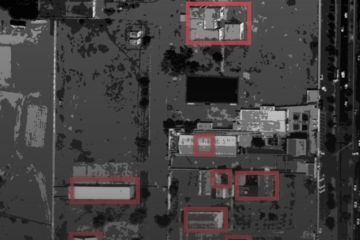
In theory, the Xidian University power plant will connect to orbital satellites that will harvest solar power 24/7 due to their geostationary orbits, before beaming that energy down to Earth via high-frequency microwave beams. The power plant will feature five different subsystems aimed at developing space-based solar power arrays. Space-based solar power has great potential as it can collect energy continuously while sidestepping common problems such as bad weather and waiting for daybreak. However, hurdles do remain, such as assessing the effects of a high-frequency energy beam on communications, air traffic, and the well-being of nearby residents.
Xidian University’s new ground station is part of a space-based solar power proposal called OMEGA, which stands for Orb-Shape Membrane Energy Gathering Array. The project was first proposed in 2014 by Duan Baoyan from the Xidian University School of Electromechanical Engineering and his colleagues. […] China’s OMEGA project, meanwhile, has successfully transmitted energy wirelessly as microwaves over a distance of approximately 180 feet (55 meters). This capability puts the project three years ahead of its original schedule, the university says in its press release. Still, Baoyan concedes that a lot of work is still required, and fully operational space-based solar power could still be years away.