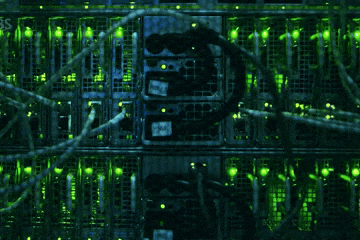
Meta, like other tech giants, is facing rapidly expanding power needs due to the growth of AI, and Alberta is rich in natural gas which sells at a significant discount to the U.S. benchmark. The province’s cold climate also makes cooling the massive super-computers and related data center infrastructure more cost-efficient. The 20 existing small- to mid-scale data centers in Alberta already pull from the province’s energy grid, which is 60% powered by natural gas. The provincial government is giving new proponents the option to build their own power sources to avoid limits on power capacity. Meta said Wednesday it will fully fund new generation and grid infrastructure for its Alberta data center, which will consume about as much electricity as 800,000 homes. Gary Demasi, Meta’s vice president for data center development, said the company will offset that electricity use by investing in clean and renewable energy. He also said the data center will use a closed-loop liquid cooling system, meaning its total water use will be less than that of a typical golf course.
[…] The company has partnered with Alberta-based Pembina Pipeline , which announced last week it will go ahead with its Greenlight Electricity Centre, a new natural gas-fired power-generation facility in Sturgeon County which will be in service in late 2030 and with which Meta has a long-term tolling agreement. Until that project is operational and for the next decade, Alberta-based power producer Capital Power will provide 250 megawatts of electricity for the site using its existing natural gas-fired fleet. The project will require approximately 150 million cubic feet per day of natural gas, according to Pembina, helping to create demand for Western Canadian natural gas producers.