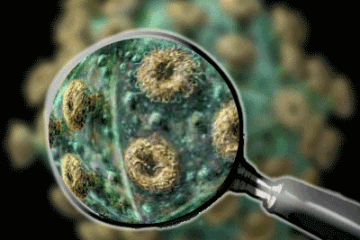
India is one of the countries worst hit by what doctors call “antimicrobial resistance” — antibiotic-resistant neonatal infections alone are responsible for the deaths of nearly 60,000 newborns each year. A new government report paints a startling picture of how things are getting worse. Tests carried out at Kasturba Hospital to find out which antibiotic would be most effective in tackling five main bacterial pathogens have found that a number of key drugs were barely effective.
A new report by Indian Council of Medical Research (ICMR) says that resistance to a powerful class of antibiotics called carbapenems – it defeats a number of pathogens – had risen by up to 10% in just one year alone. The report collects data on antibiotic resistance from up to 30 public and private hospitals every year. “The reason why this is alarming is that it is a great drug to treat sepsis [a life-threatening condition] and sometimes used as a first line of treatment in hospitals for very sick patients in ICUs,” says Dr Kamini Walia, a scientist at Indian Council of Medical Research (ICMR) and lead author of the study.